
Off-Grid Solar Systems Built Around Your Load
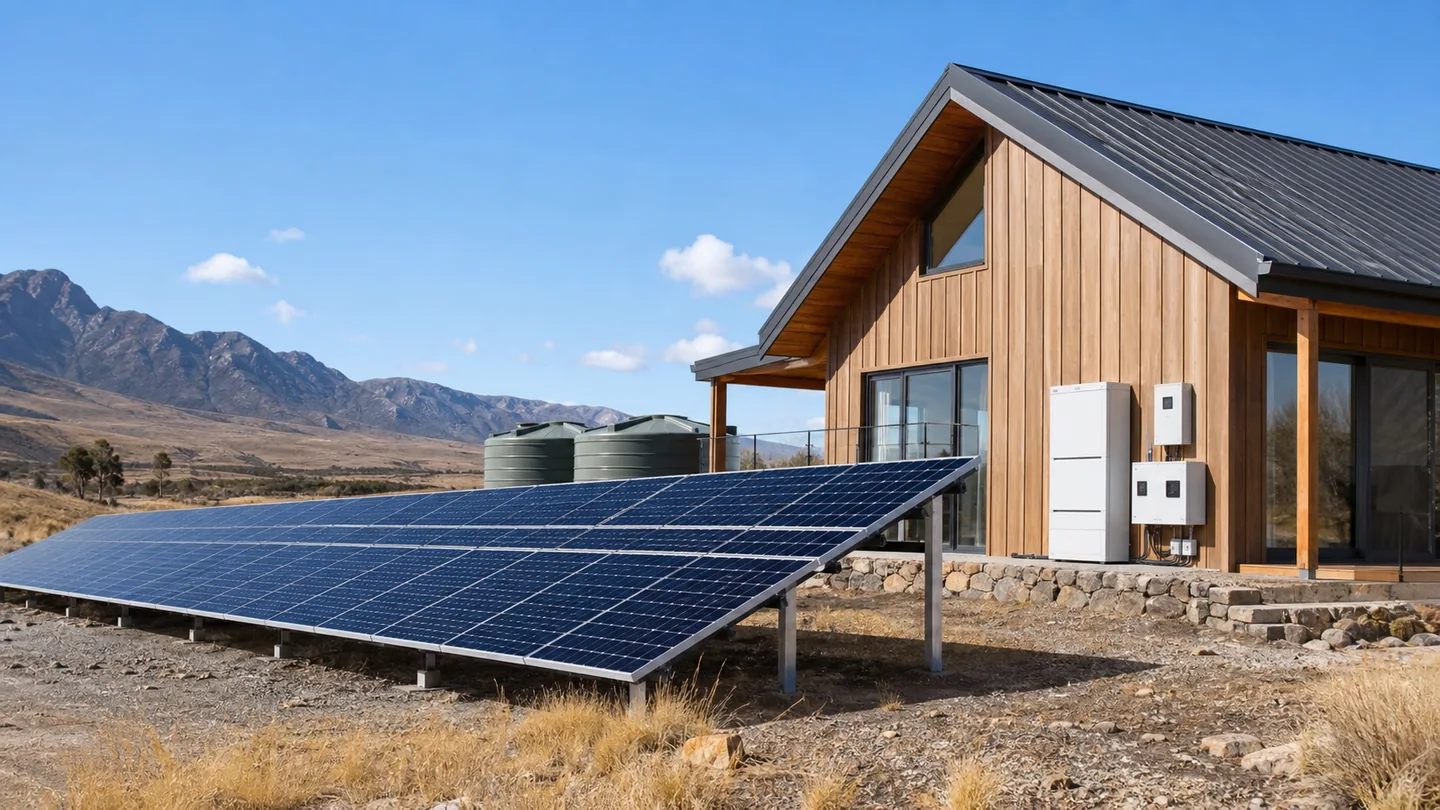
Plan an off-grid solar system around your daily kWh loads, seasonal sunlight, and overnight backup hours. Match solar modules, LiFePO4 battery storage, hybrid inverters, and MPPT controls for remote homes, cabins, farms, irrigation pumps, telecom, and commercial microgrids.
5–500 kW
scalable
LiFePO4
storage
Load-led design
Export-ready documentation
OEM / ODM support
Global project delivery
Start with the load.
Then build the system.
Example 24-hour load profile
01
Daily consumption —
List each appliance's wattage and operating hours to estimate daily energy use in kWh.
02
Peak load —
Maximum simultaneous demand (kW).
03
Backup hours —
Define the hours or days your off grid battery bank must support essential loads without solar charging.
04
Solar resource —
Irradiance data and seasonal variations.
05
Site conditions —
Location, temperature, altitude and access.
Components of an Off Grid Solar Power System
PV Array

High-efficiency modules
String monitoring (optional)
MPPT / Hybrid Inverter

MPPT controllers
Hybrid inverter
AC / DC distribution
LiFePO4 Battery Bank

LiFePO4 cells & modules
BMS protection
Scalable capacity
AC / DC Loads

Critical loads
AC & DC distribution
Load prioritization
Voltage Options
48 VDC / 96 VDC / 192 VDC / 380–480 VAC
Inverter Topologies
Pure Sine Wave / Split Phase / Three Phase
System Efficiency
Up to 95%
Protection
IP-rated enclosures & safety standards
A scalable range, engineered to suit the site
Voltage Options
48 VDC / 96 VDC / 192 VDC / 380–480 VAC
Inverter Topologies
Pure Sine Wave / Split Phase / Three Phase
System Efficiency
Up to 95%
Protection
IP-rated enclosures & safety standards
01
Remote Home
5–20 kW
Solar Array
8–30 kWp
Battery Capacity
10–60 kWh
Inverter Topology
Single Phase
Typical Loads
Home, lighting, fridge, comms, appliances
02
Farm & Workshop
20–100 kW
Solar Array
30–150 kWp
Battery Capacity
40–200 kWh
Inverter Topology
Three Phase
Typical Loads
Pumps, cold storage, workshop, machinery
03
Commercial / Infrastructure
100–500 kW+
Solar Array
150–800+ kWp
Battery Capacity
200–2,000+ kWh
Inverter Topology
Three Phase / Parallel Systems
Typical Loads
Facilities, telecom, industrial, microgrids
Built for real-world applications
Remote Homes & Cabins
Reliable solar power for off-grid living, remote cabins, and tiny homes.

Farms & Irrigation
Clean solar electricity for water pumps, irrigation, and cold storage.

Telecom & Monitoring
Continuous solar energy keeping remote telecom and monitoring sites online.

Commercial Microgrids
Resilient solar and battery microgrids for remote business and site power.
24/7 Energy Flow
DURING THE DAY
Solar PV
→
Loads
Solar powers loads.
Surplus charges the battery.
AFTER SUNSET
Battery
→
Loads
Stored energy powers
your critical loads.
Solar Generation —
Daytime power from PV array
AC / DC Loads —
Powering critical loads
Battery Storage —
LiFePO4 stores clean energy
Generator Ready —
Automatic backup when needed
Power that keeps working after sunset
High-Cycle LiFePO4 —
6,000+ cycles at 80% DoD for long service life.
Remote Monitoring —
Real-time system data and alerts from anywhere.
Generator Integration —
Seamless auto start/stop and smart energy management.
Protection & Control —
Advanced BMS, protections and system controls.
One project path, from load data to delivery
Scroll through the five stages of an engineered off-grid power project. Each stage adds a clear deliverable and approval point.

01
Submit Load Data
Share the daily energy use, peak demand, backup target and site conditions that shape the system brief.

02
Engineering Review
Our engineers validate PV production, inverter topology, battery capacity and protection requirements.

03
System Proposal
Receive a project-specific technical and commercial proposal with the selected equipment and documentation.

04
Production & FAT
Manufacturing is followed by documented factory acceptance checks before the equipment is prepared for shipment.

05
Export & Delivery
Export packing, final document checks and practical delivery coordination move the system toward the site.

From design review to factory acceptance testing
QC Records &
Test Reports
Key checks are documented before release.
Certification
Support
Compliance files prepared for the project.
Export
Packing
Protected packing matched to route needs.
Traceable
Components
Critical components remain identifiable.
Project documentation prepared for international B2B delivery.
Frequently Asked Questions
Technical answers for custom off-grid solar projects.
How do you size an off-grid solar system?
Start with daily energy use, simultaneous peak loads, motor starting demand, backup hours, and seasonal sunlight. For a small off-grid solar system on a cabin or tiny home, list refrigeration and always-on loads separately from occasional appliances, check the usable overnight LiFePO4 battery capacity needed, and compare usable roof area against seasonal sun—or run our solar panel output calculator before finalizing your stand-alone array and residential battery sizing.
How many backup hours can the battery provide?
Estimate backup hours by dividing usable battery energy in kWh by the average load in kW, allowing for inverter losses. An off grid battery bank must also meet peak discharge demand. Compare the battery's permitted depth of discharge, temperature limits and BMS settings with the proposed inverter.
Can a generator be integrated?
Yes. Generator backup can be included with compatible controls for automatic start/stop, charging support and sensible generator use during prolonged low-solar conditions.
What happens during cloudy weather or seasonal low sun?
The design uses site irradiance data and your required autonomy to evaluate lower-solar periods. Battery capacity, PV oversizing and a backup source can then be specified according to the project’s risk tolerance.
Can the system be expanded later?
Many projects can be planned with expansion in mind. The final approach depends on inverter parallel capability, battery connection limits, PV string design and future load forecasts, so it should be confirmed during engineering review.
Which voltages and frequencies are supported?
System voltage and AC output are specified for the project. Common options include 48 VDC battery systems and single- or three-phase AC outputs; final details should be confirmed against local load and grid-interface requirements.
What documents are included for B2B projects?
For an off grid solar system kit, confirm the bill of materials before ordering: solar panels, charge controller or hybrid inverter, battery storage, mounting, cables and protection devices. The proposal should state which items and installation services are included. Project documents may include a single-line diagram and datasheets, depending on scope.
Can the system support three-phase loads?
Three-phase inverter topologies can be specified for suitable commercial, workshop and infrastructure loads. The design team checks voltage, frequency, motor starting requirements and load balance before selection.
What battery chemistry is used?
The solution is designed around LiFePO4 energy storage because of its strong cycle-life and safety characteristics. Exact capacity, BMS functions and temperature protection are selected for the application.
What should I check when planning a DIY off grid solar system?
For DIY off grid solar power systems, prepare a load list and site layout, then check PV string voltage, controller input limits, battery compatibility, inverter surge rating and protection requirements with a qualified installer. For backyard solar panels or a shed, also confirm mounting space, shading and local installation requirements.
