
Custom solar panels for consumer IoT
Custom Solar Panels for Consumer IoT Devices
Honray Energy designs custom small solar panels for OEM and ODM consumer IoT products, including smart-home cameras, garden sensors, outdoor lighting and GPS-enabled mobility devices. We review panel size, voltage, battery and charging requirements together, so the solar module fits the product instead of forcing the product to fit a standard panel.
Custom small solar panels
Smart-home and garden devices
Outdoor lighting and sensors
OEM / ODM project support
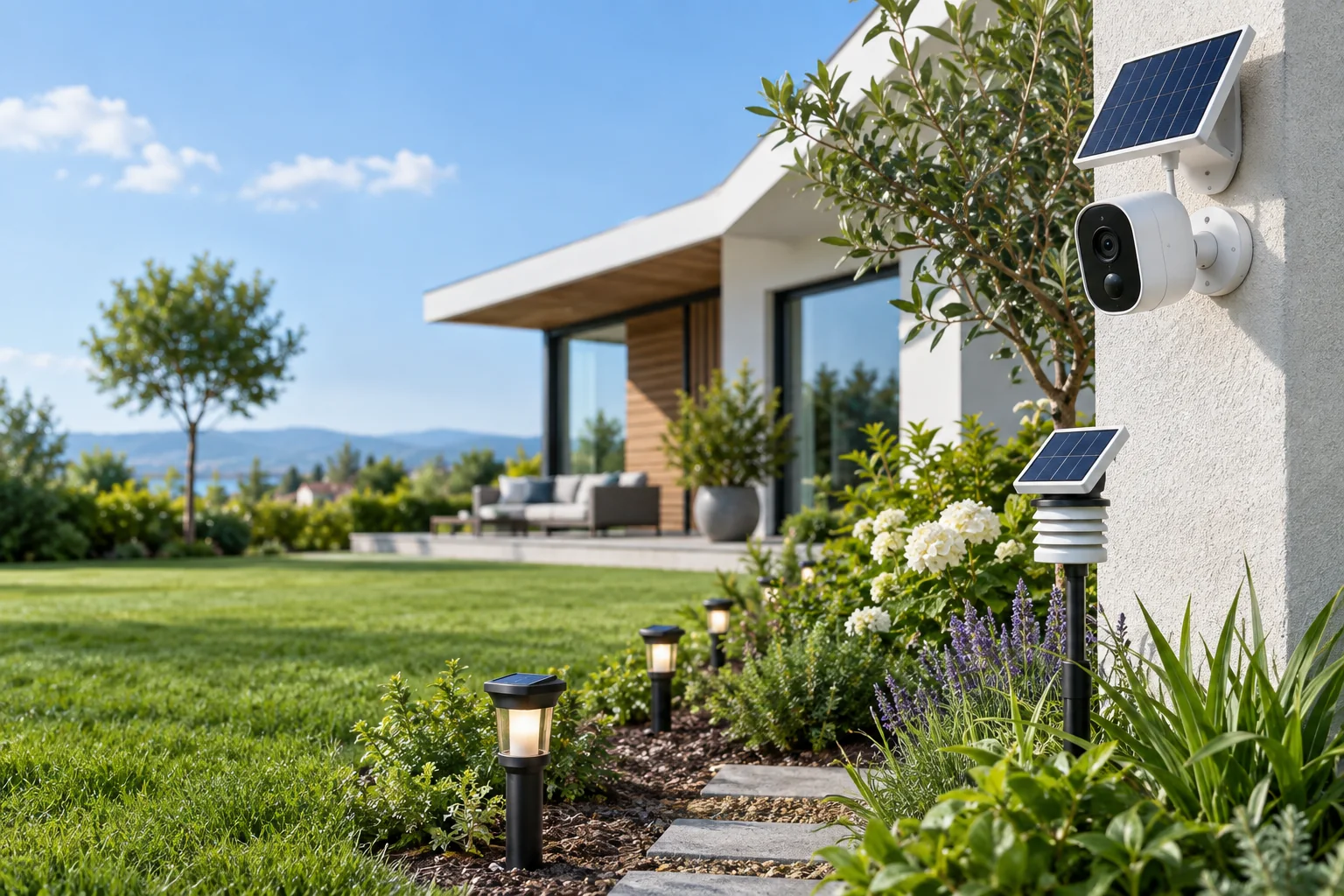
Consumer IoT power integration
Why Consumer IoT Needs Custom Solar Panels
Consumer IoT solar panels must fit compact housings, charging routines and outdoor conditions. A project review aligns the requirements before configuration.
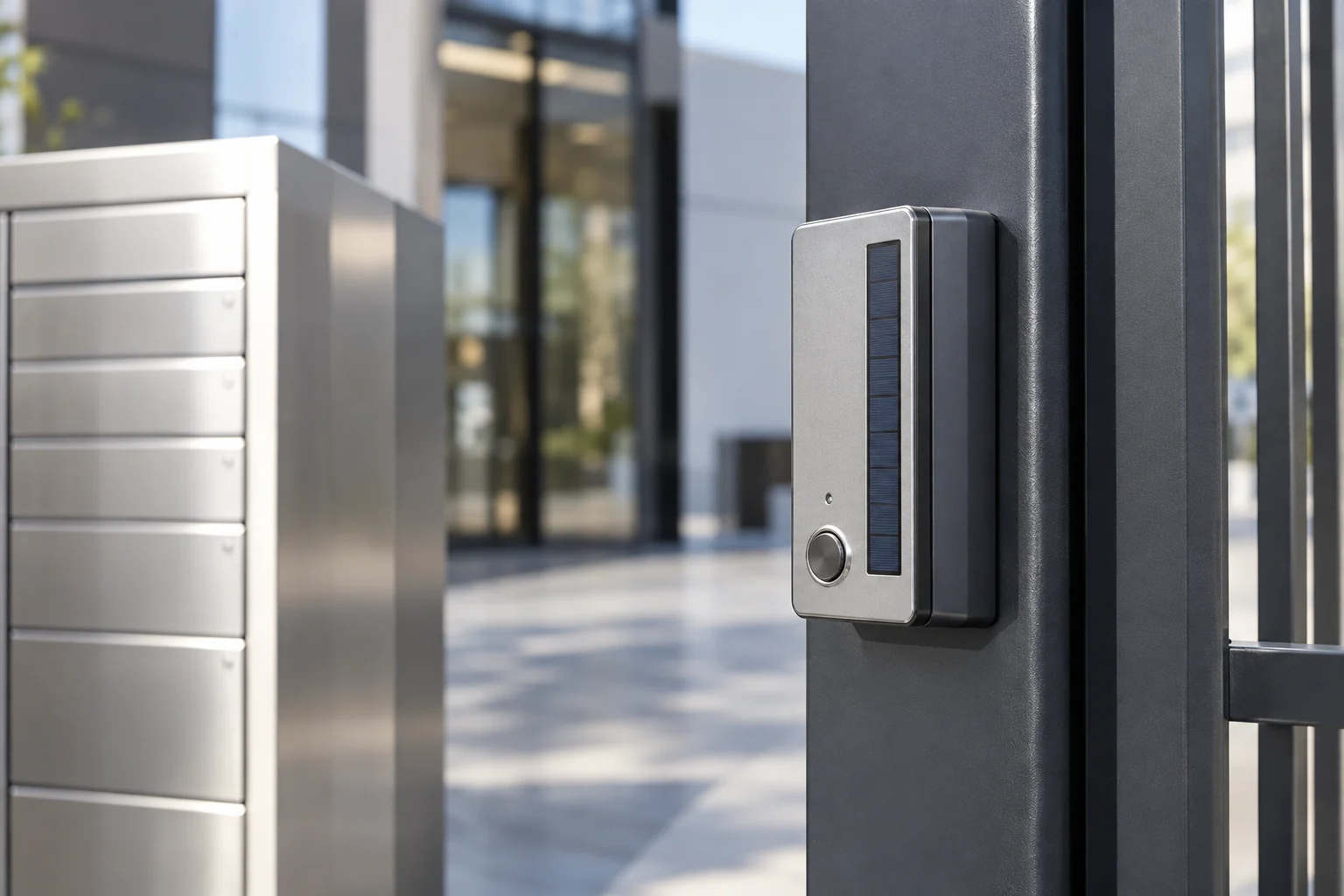
Limited product surface area
Custom size, shape and cell layout help use the enclosure or mounting area without treating the panel as a separate add-on.
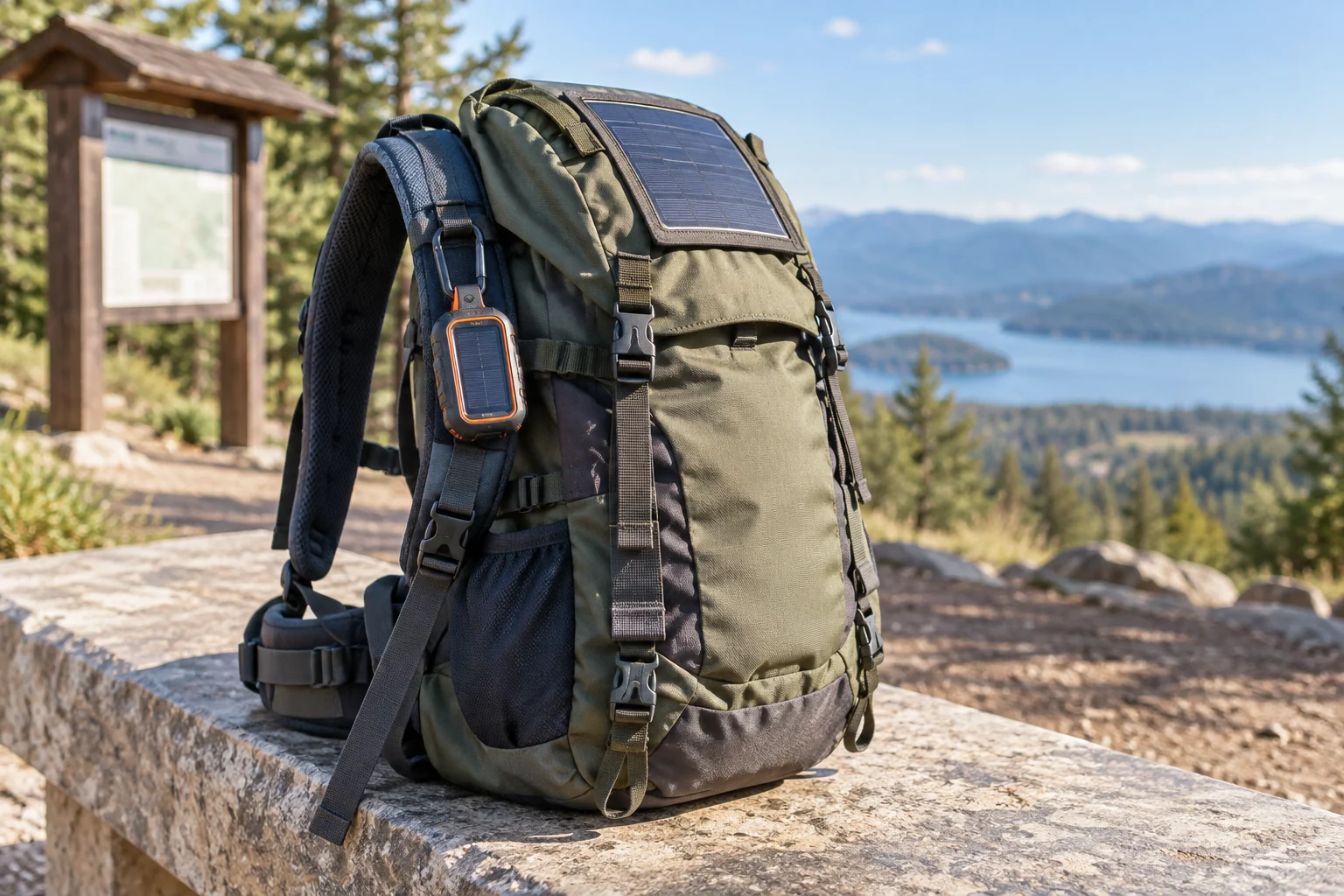
Daily device power profile
Standby consumption, app activity, radio transmissions and the user routine all affect the energy discussion.
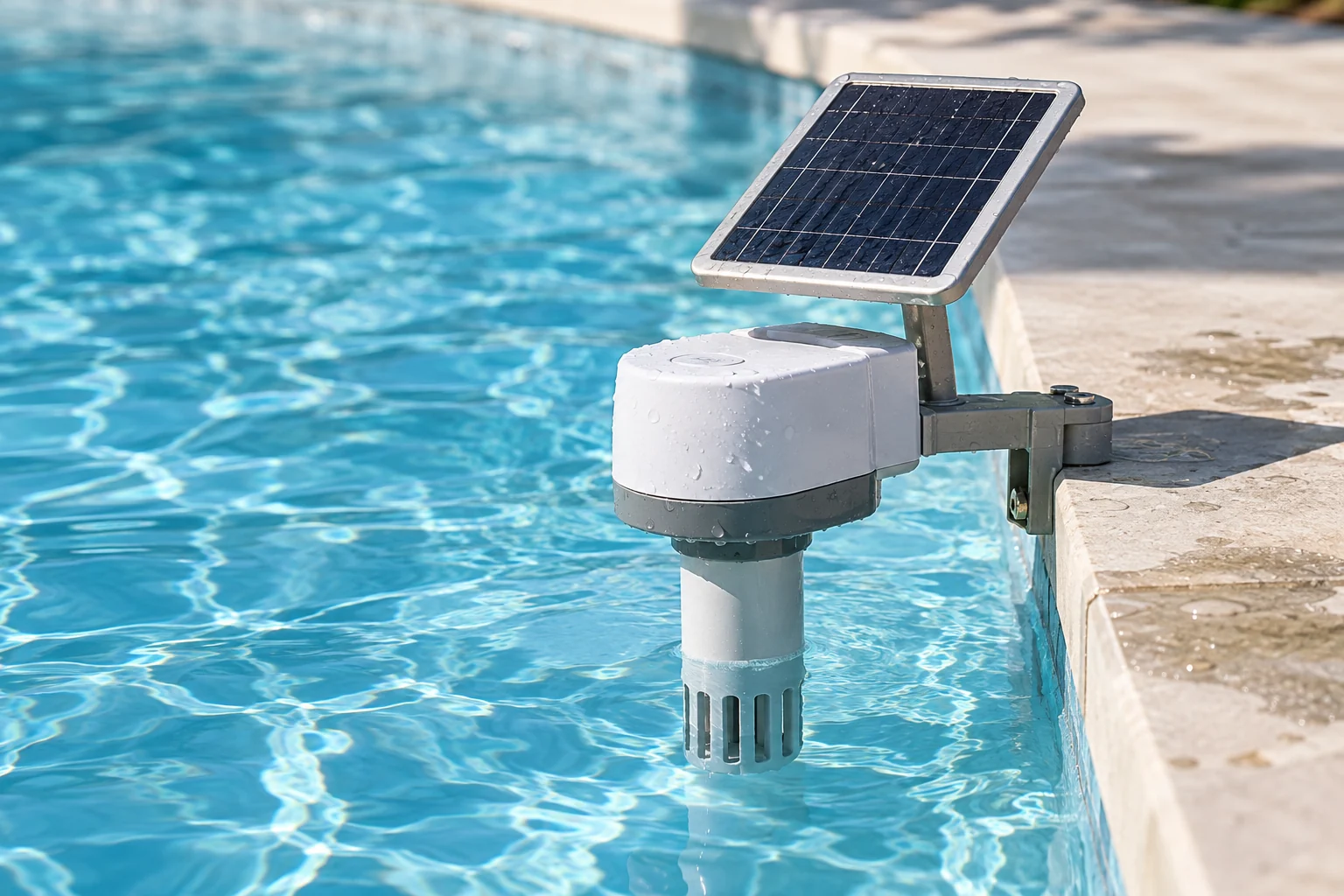
Outdoor exposure at home
Construction choices need to suit the product's expected sun, rain, temperature and handling conditions.
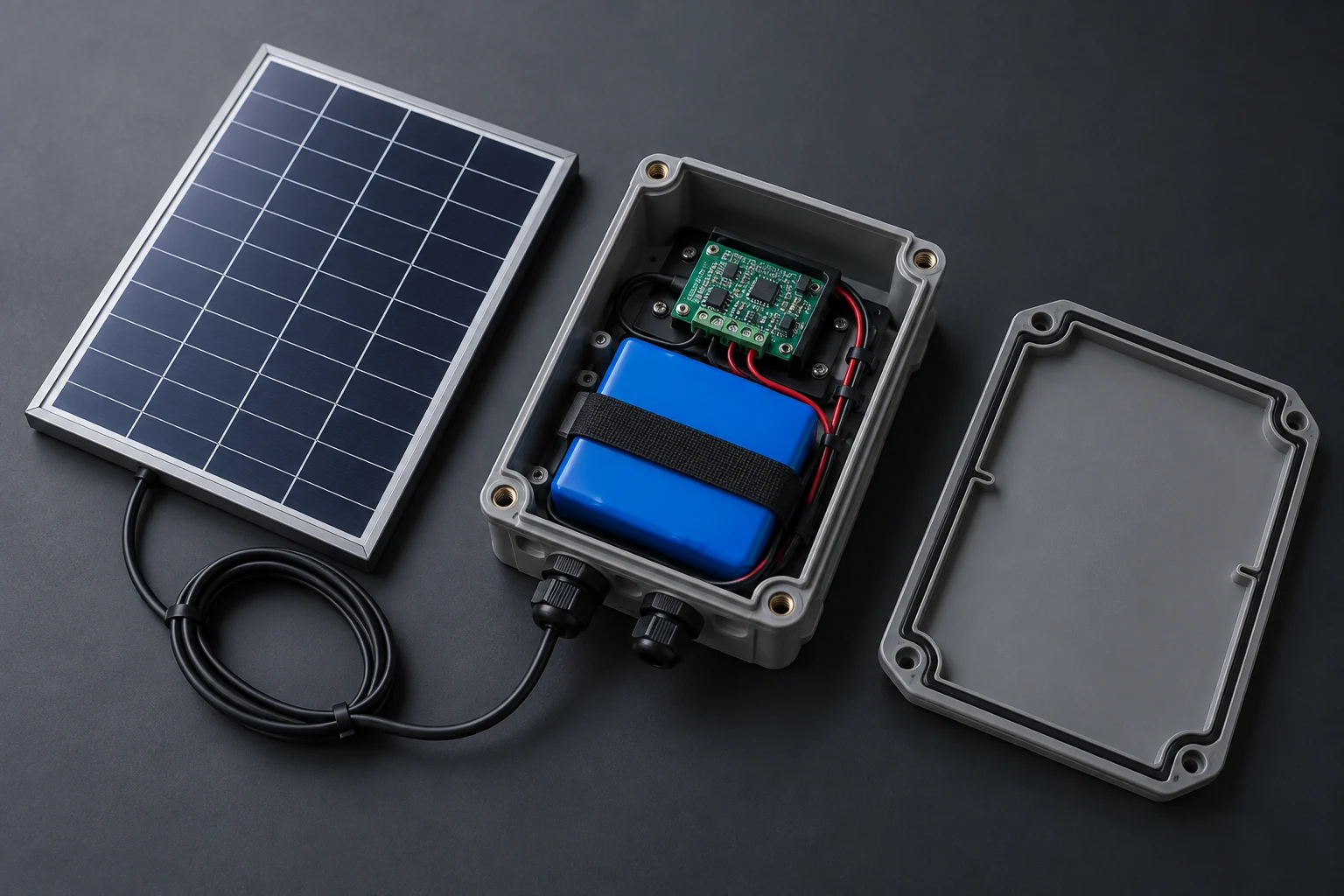
Battery and solar charging match
Panel voltage and output should be reviewed with the battery and charging circuit, not selected in isolation.
Custom solar panel design process
How We Design Solar Panels for Consumer IoT Devices
Every consumer IoT solar panel project starts with product inputs rather than a preselected wattage. A CAD drawing, product photo or enclosure sketch can help identify usable panel area, mounting limits and integration details.
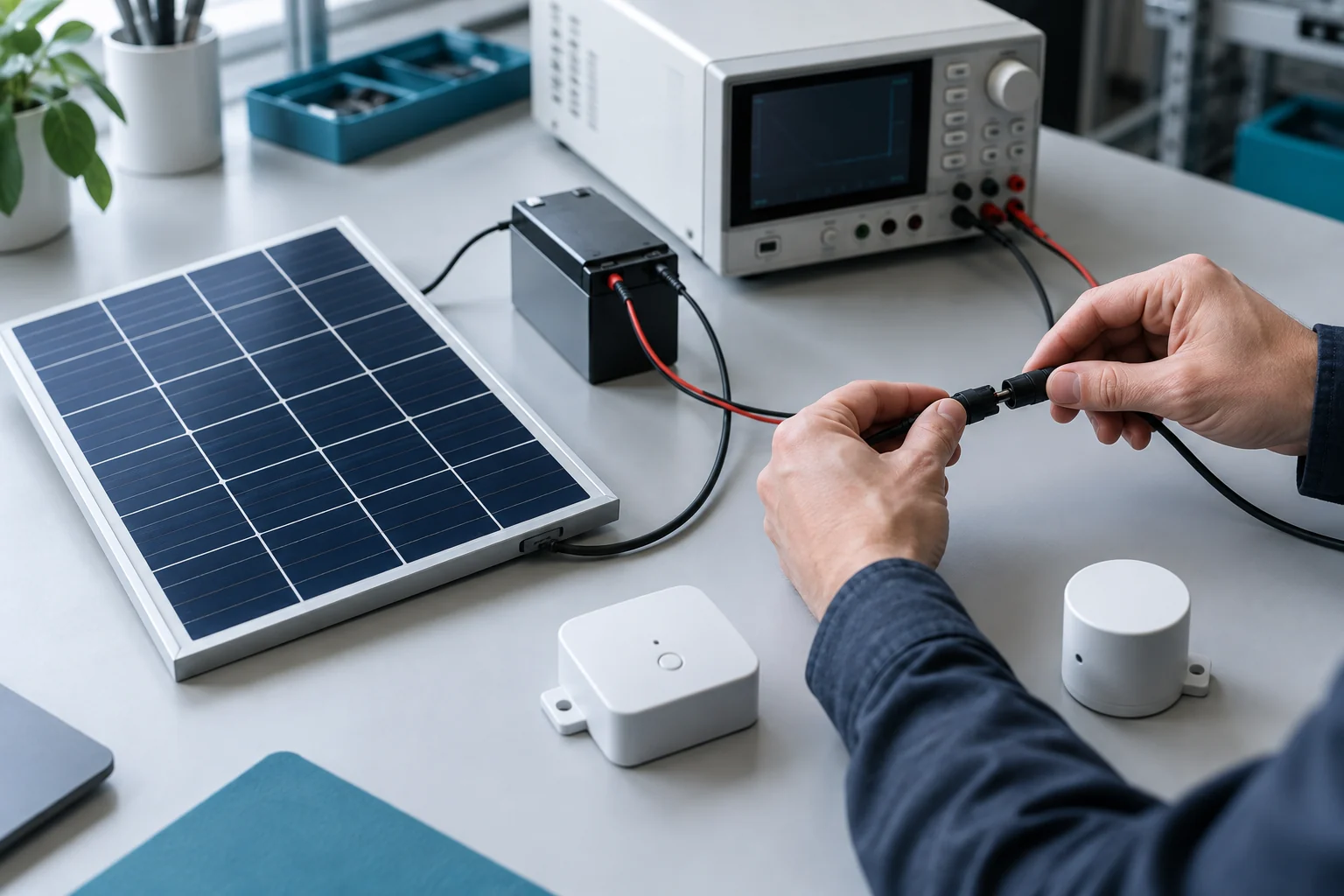
01
Define device and energy requirements
Review device use, power profile, battery and charging path together before a panel configuration is selected.
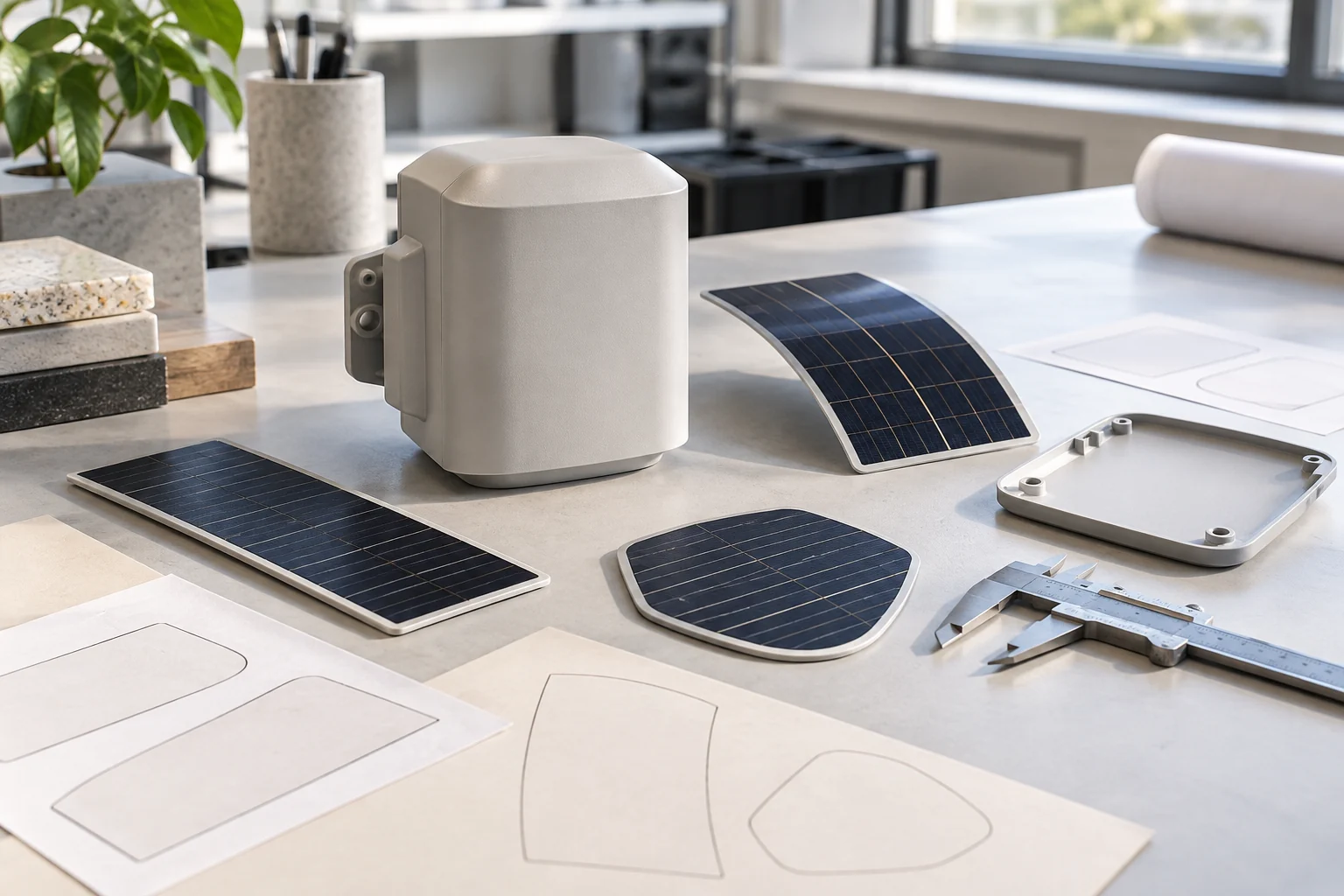
02
Fit the solar panel to the product
Check usable area, panel shape, orientation, mounting and visual fit within the product housing.
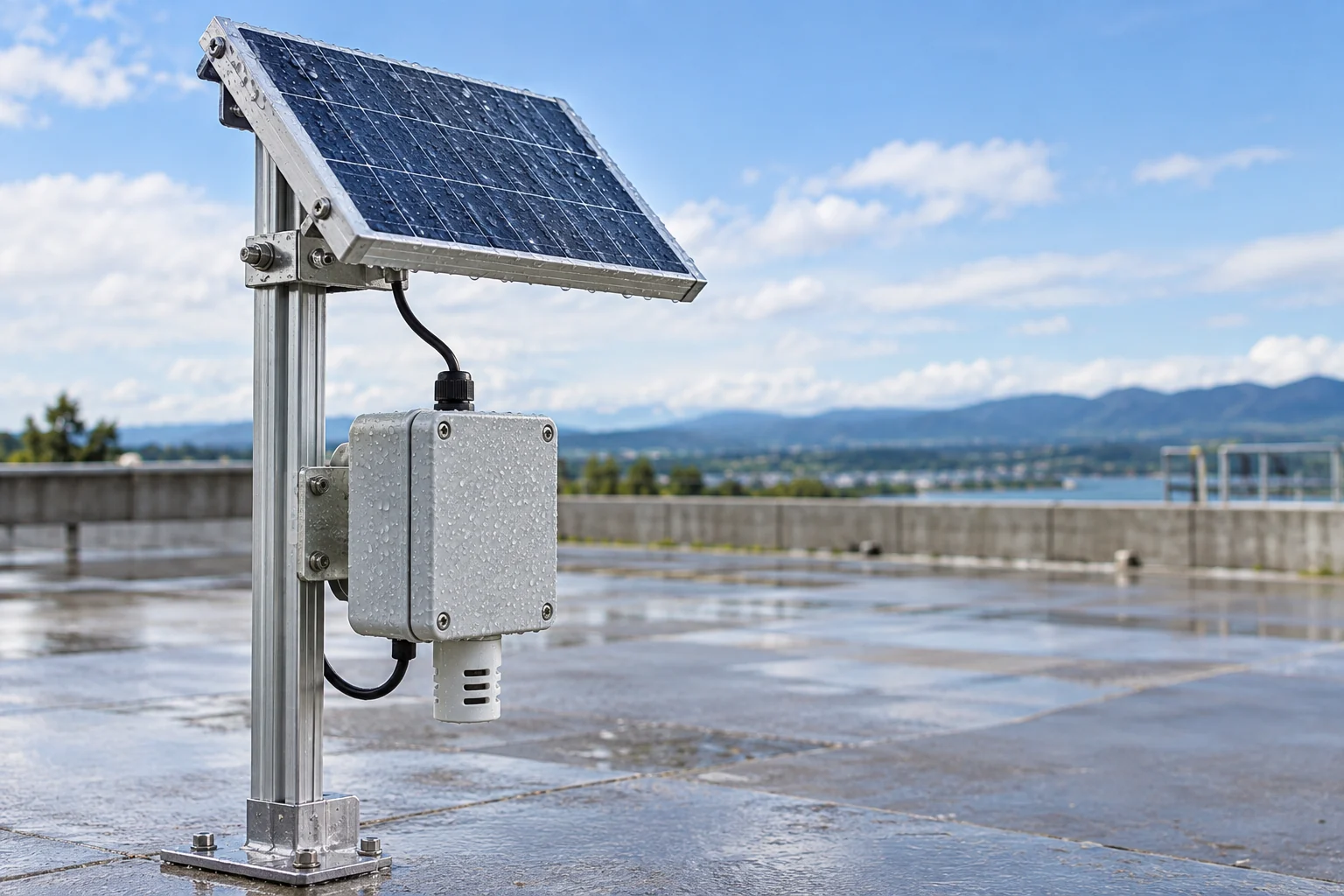
03
Specify construction for outdoor use
Set construction priorities around expected sunlight, weather exposure, handling and temperature conditions.
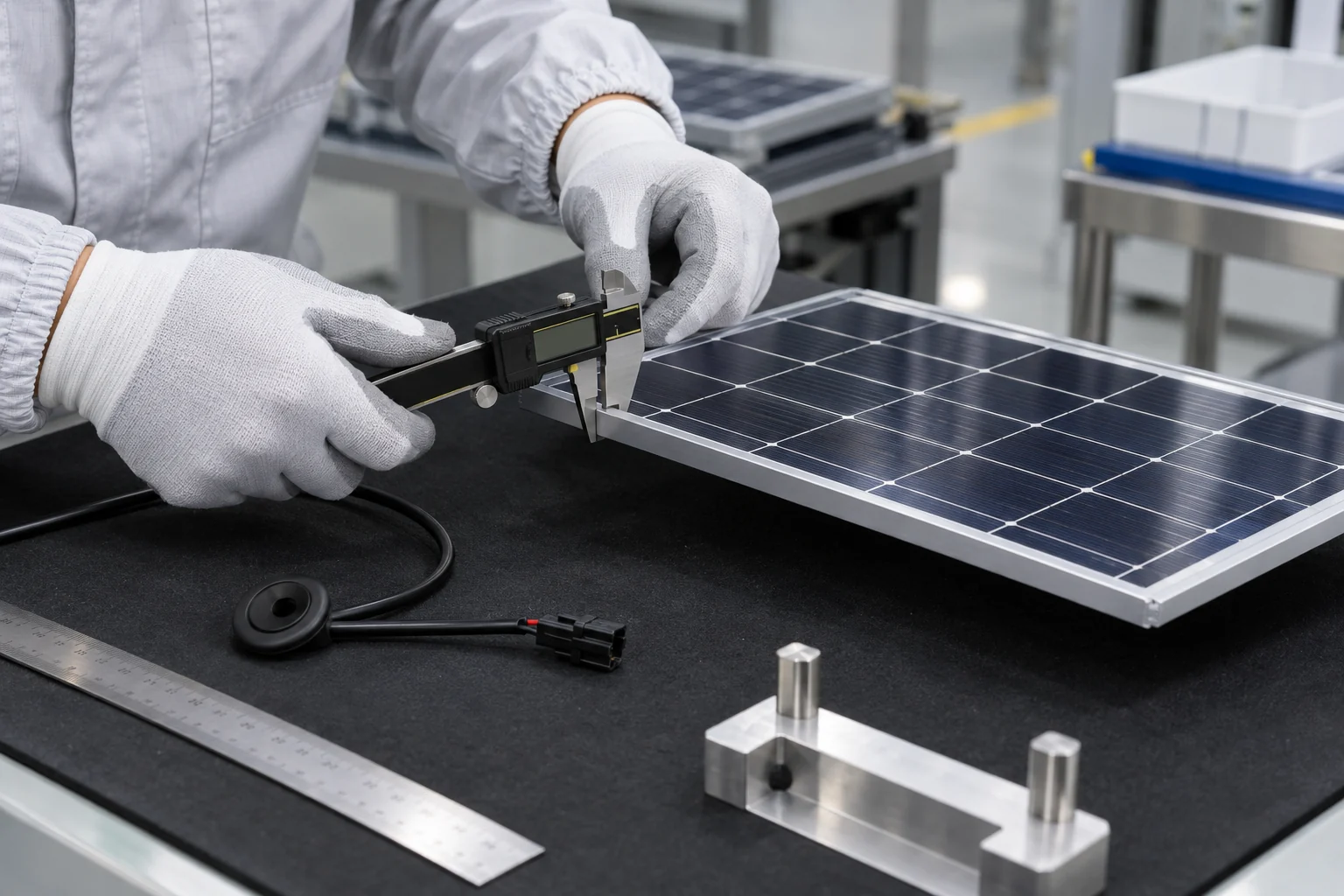
04
Confirm the panel specification
Review panel size, electrical output, cable exit and mechanical fit before prototype or production planning.
Consumer IoT applications
Custom Solar Panels for Consumer IoT Applications
Final solar panel specifications for consumer IoT products depend on device load, usable surface, charging path and operating environment.
Solar panels for smart-home security cameras
Custom small solar panel integration for exterior cameras, sensors and related connected-home devices.
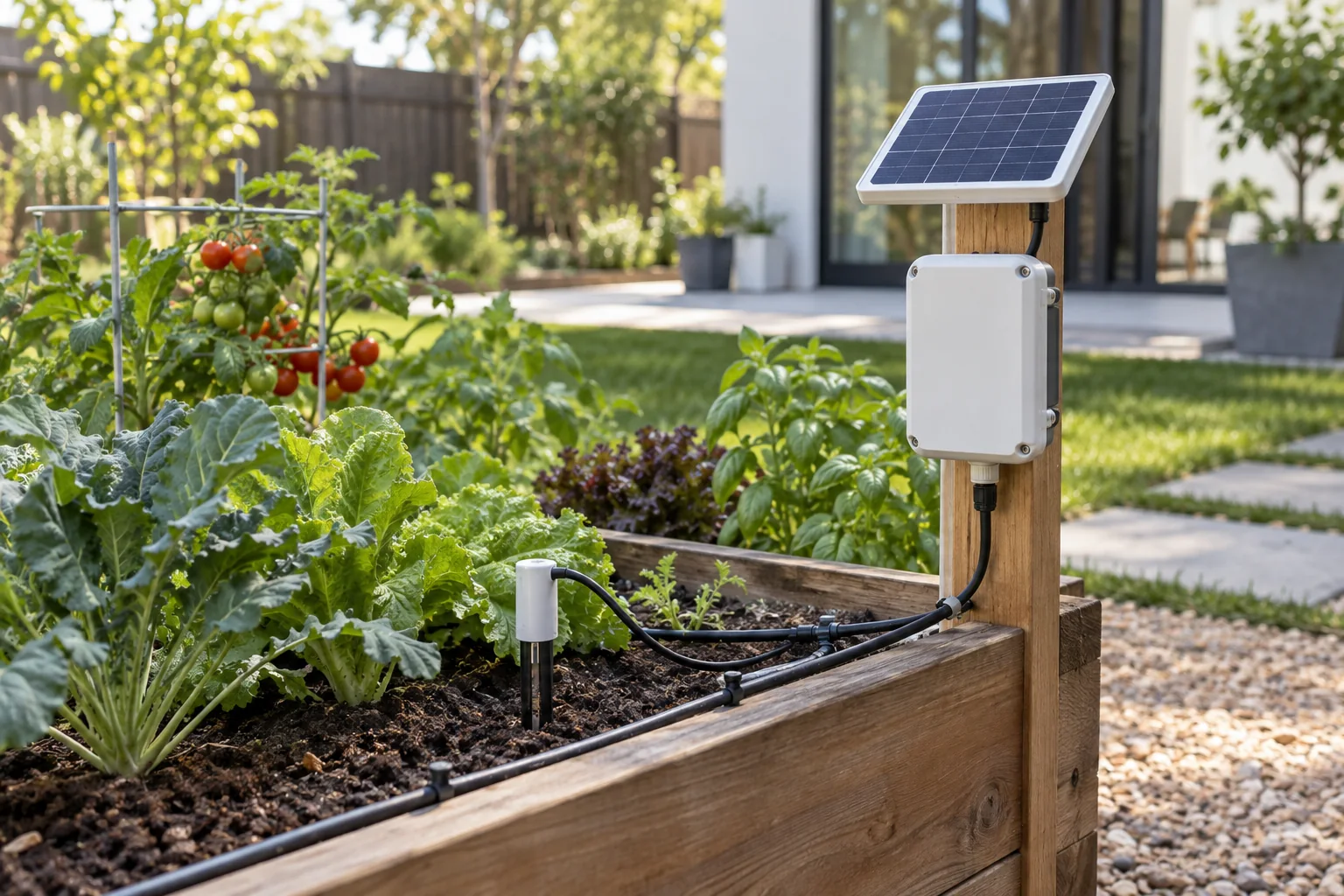
Solar panels for smart garden sensors
Product-fit solar modules for garden sensors, irrigation controls and outdoor environmental devices.

Solar panels for outdoor smart lighting
Integrated solar options for residential pathway lighting, landscape controls and home exterior sensors.
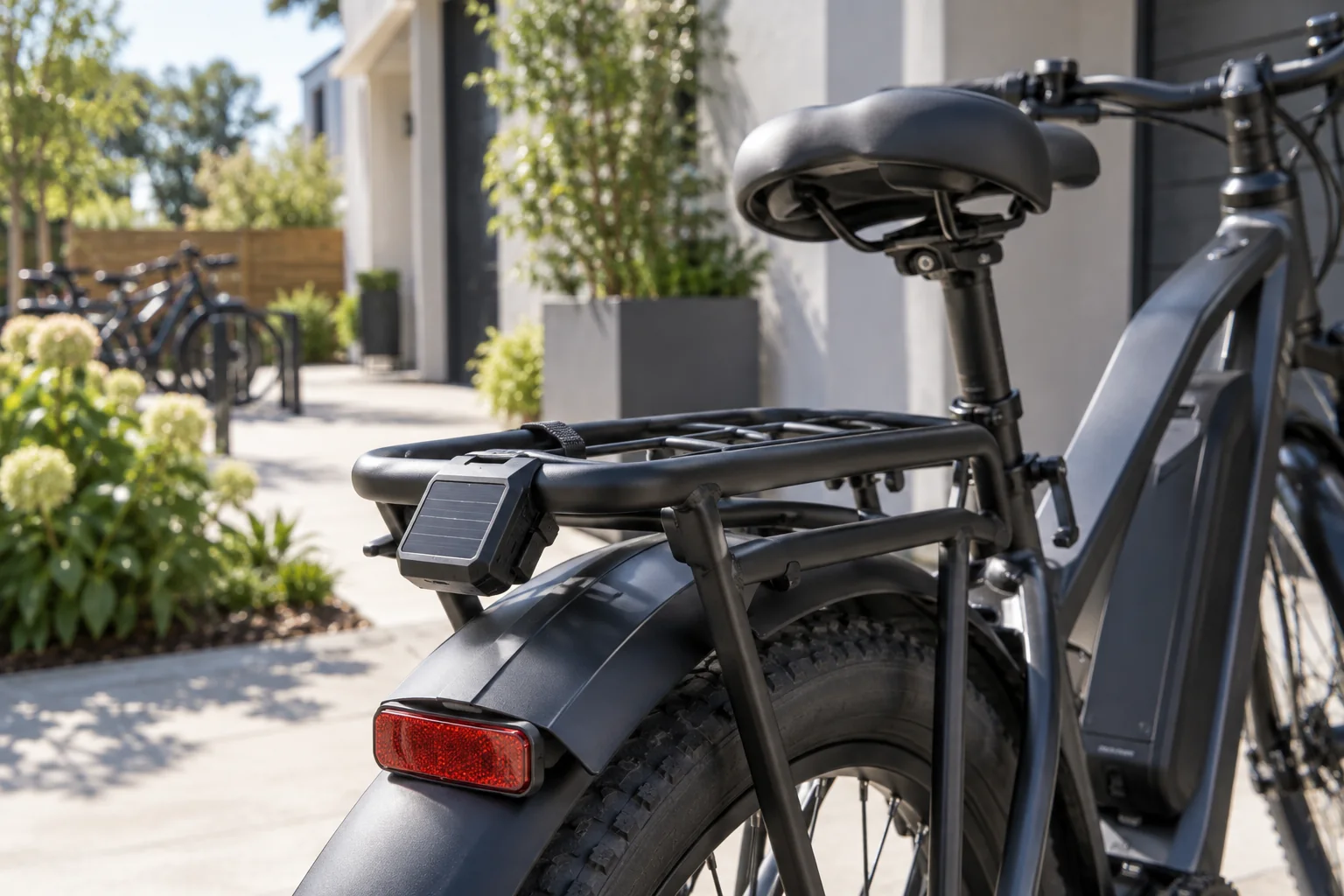
Solar-assisted GPS mobility trackers
Solar-assistance discussions for consumer tracking products used on bicycles and related mobility devices.
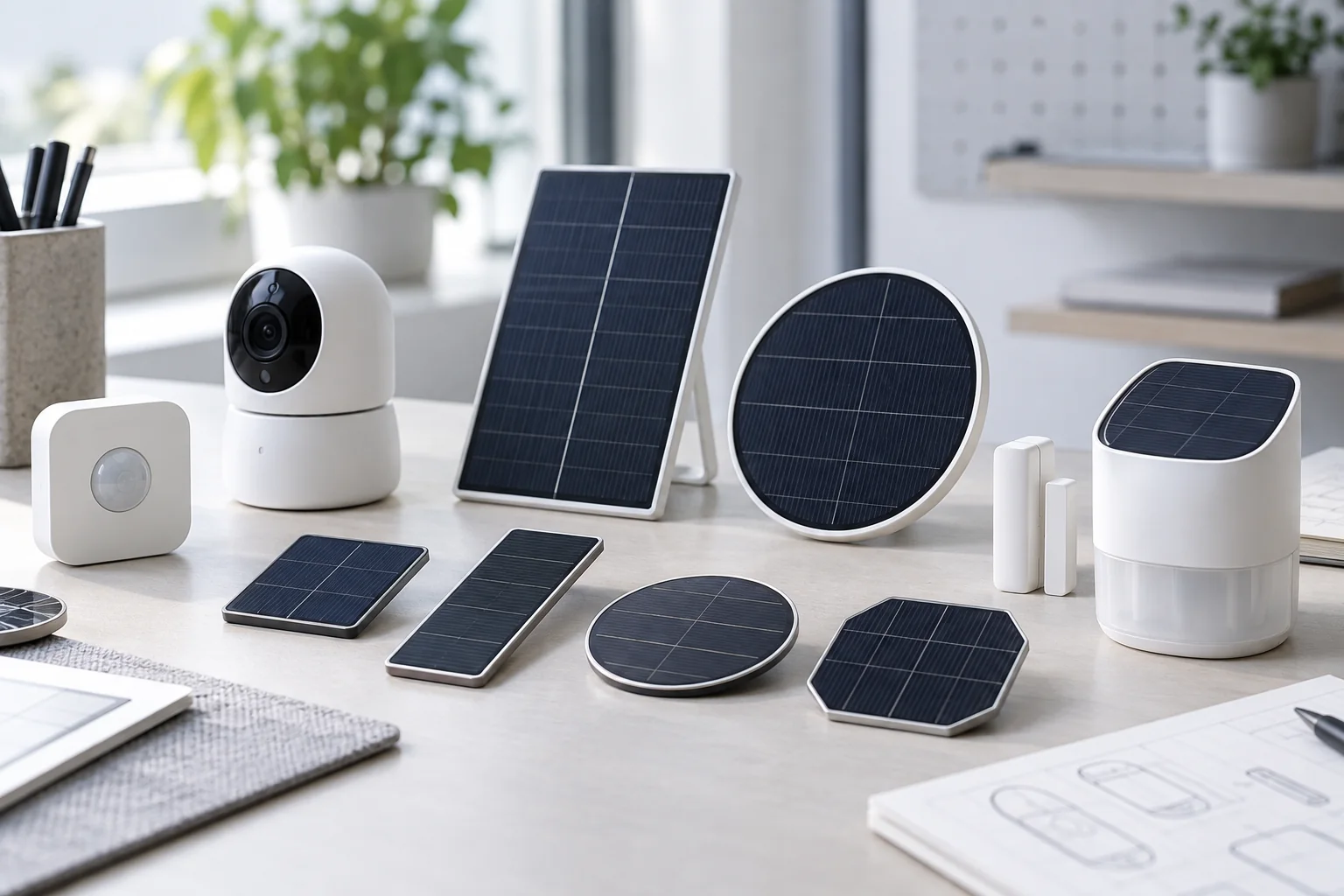
Custom small solar panel options
Custom Small Solar Panels for Consumer IoT
Discuss a custom module around the device category and usable surface. See our custom small solar panels page for the broader OEM approach; final details follow a project review.
Custom size and shape
Adapt the module footprint and cell layout to the usable product surface.
Panel voltage and output
Review the electrical configuration with the battery and charging architecture.
Surface construction
Choose a suitable construction for the expected environment and product handling.
Electrical and mechanical integration
Consider cable exit, connectors, mounting and enclosure-related needs.
Consumer IoT solar panel FAQ
FAQ: Custom Solar Panels for Consumer IoT Devices
For a product-specific answer, share the device requirement and intended use scenario. The project review can then focus on the inputs that affect the integration.
What information is needed to design a custom solar panel for an IoT device?
A useful starting point is the device power use and duty cycle, battery and charging information, available panel area, housing or mounting details, and the expected operating environment.
How do you choose the right solar panel size for a consumer IoT device?
Solar panel size is reviewed with the device's daily energy demand, battery requirements, charging path, usable surface area and expected sunlight conditions. A project-specific review is needed before confirming a panel size.
Can custom small solar panels be matched to smart-home device housings?
Custom small solar panel dimensions, cell layout, electrical output and integration details can be reviewed around the available enclosure surface and device requirements.
Can cable exits and connectors be customized for an IoT device?
Share the connector type, cable length, polarity, cable-exit position and routing constraints with your device drawings. These details can be reviewed alongside panel dimensions and the charging circuit before the specification is confirmed.
How should we consider shading and changes in sunlight?
Describe where and how the device will be installed, including its orientation, nearby obstructions and seasonal use. Panel selection should account for the expected light conditions, device energy demand and battery reserve; a rated panel output alone does not establish daily energy availability.
Which solar panel voltage is right for an IoT device?
Solar panel voltage should be reviewed with the battery and charging architecture rather than selected from battery voltage alone. The charging controller, operating voltage and required panel characteristics all matter.
Can solar panels be adapted to outdoor smart lighting or garden devices?
Outdoor lighting, garden controls and exterior sensors can be evaluated around their available mounting surface, power profile, charging needs and expected exposure conditions.
When is a prototype review useful before OEM production?
A prototype review is useful when panel fit, mounting, cable exits, appearance requirements or electrical integration need confirmation before later project decisions are finalized.
Can the panel shape and appearance be adapted to the product design?
Provide an enclosure drawing or sketch showing the usable surface, outline, thickness limits and preferred appearance. Panel shape, cell layout and surface construction can then be reviewed together, with final choices subject to electrical and mechanical requirements.
What should I include when requesting a quote for a custom IoT solar panel?
Include available drawings, target panel dimensions, device power use, battery and charging information, installation conditions and expected order quantity. Also identify any connector, mounting, testing or documentation requirements so the project review can address them.