
LiFePO4 Solar Batteries &
Energy Storage
Source lithium iron phosphate (LiFePO4, also called LFP) solar batteries for home energy storage, RV, marine and off-grid systems. Compare LiFePO4 models by voltage, usable energy, BMS current limits and installation format, then request an OEM or wholesale quotation.
As a solar battery manufacturer and LiFePO4 battery supplier, Honray supports 12V–48V battery sourcing, private-label programs and custom configurations for international markets.
12V–48V
Voltage Options
100Ah–300Ah
Capacity Range
Smart BMS
Intelligent Protection
OEM/ODM
Custom Battery Solutions
Choose the Right Solar Battery
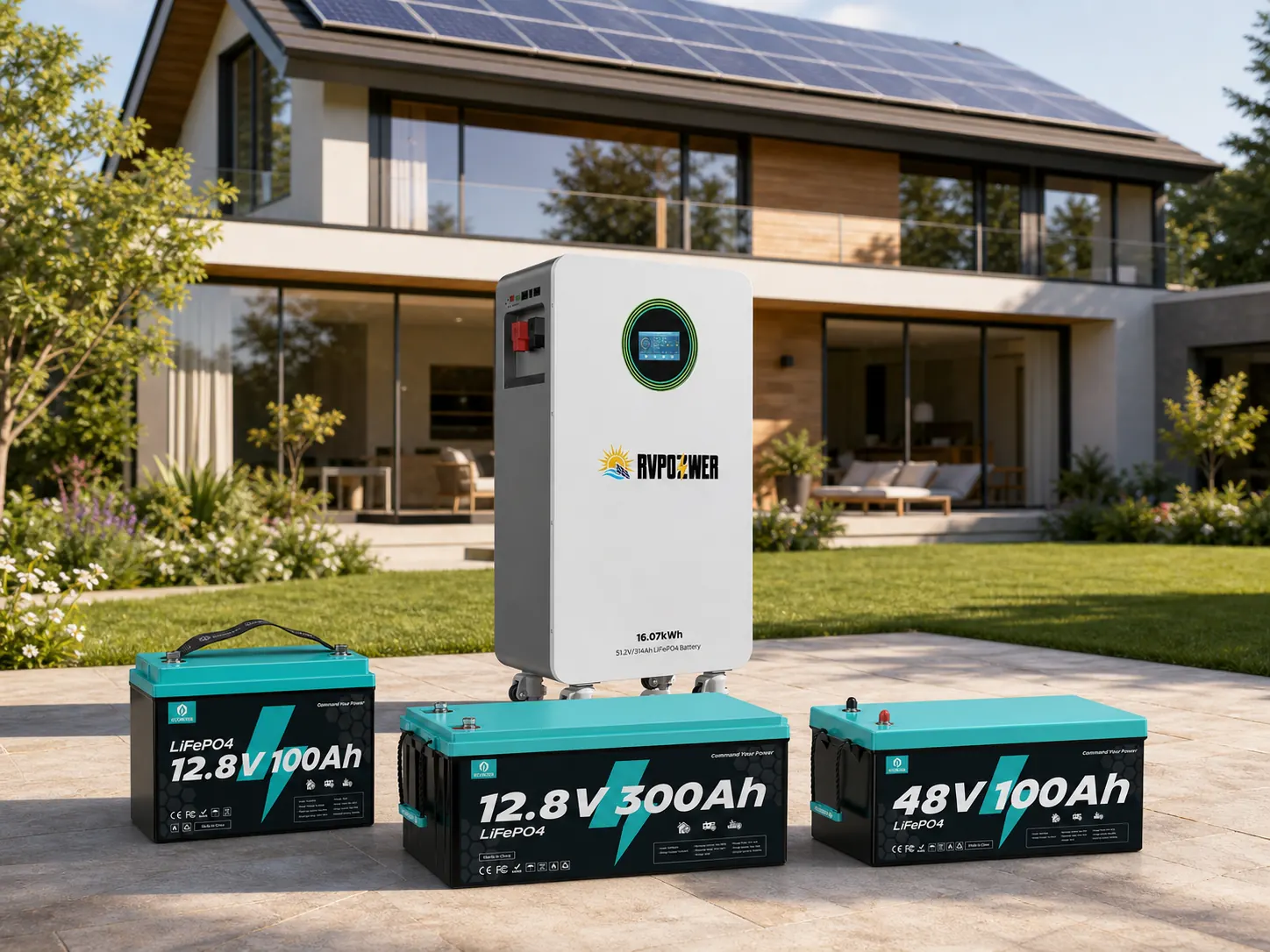
EcoBoss 12.8V 100Ah

Nominal Voltage
12.8V
Capacity
100Ah
Stored Energy
1.28kWh
EcoBoss 12.8V 200Ah

Nominal Voltage
12.8V
Capacity
200Ah
Stored Energy
2.56kWh
EcoBoss 12.8V 300Ah

Nominal Voltage
12.8V
Capacity
300Ah
Stored Energy
3.84kWh
EcoBoss 24V 100Ah

Nominal Voltage
24V
Capacity
100Ah
Stored Energy
2.56kWh
EcoBoss 48V 100Ah

Nominal Voltage
48V
Capacity
100Ah
Stored Energy
5.12kWh
RVPOZWER 51.2V 314Ah

Nominal Voltage
51.2V
Capacity
314Ah
Stored Energy
16.07kWh
EcoBoss 12V 100Ah Mini

Nominal Voltage
12.8V
Capacity
100Ah
Form Factor
Mini (fits Group 24 box)
EcoBoss 12V 100Ah Slim

Nominal Voltage
12.8V
Capacity
100Ah
Profile
2.87 in
Solar Battery Solutions for Every Application

Home Backup
Reliable backup power for homes and critical loads.

RV & Camper
Compact, dependable storage for life on the road.

Marine
Dependable energy for trolling motors and marine electronics.

Off-Grid Systems
Scalable battery storage for remote and off-grid locations.
Select a Solar Battery by
Voltage, Capacity and Load
When selecting lithium batteries for solar panels, compare usable energy in kWh, load demand and required runtime. Match the bank voltage, charge settings and discharge limits to the inverter and controller; Ah values alone are not enough to compare different voltages.
Application
Home Backup
RV & Camper
Marine
Off-Grid Systems
Recommended Voltage
48V
12.8V / 24V
12.8V / 24V
24V / 48V
Battery Capacity
100Ah
100Ah–300Ah
100Ah–300Ah
100Ah–300Ah
Key Priority
Backup runtime
Space and weight
Weather resistance
Expandable storage
Home Backup
Recommended Voltage
48V
Battery Capacity
100Ah
Key Priority
Backup runtime
RV & Camper
Recommended Voltage
12.8V / 24V
Battery Capacity
100Ah–300Ah
Key Priority
Space and weight
Marine
Recommended Voltage
12.8V / 24V
Battery Capacity
100Ah–300Ah
Key Priority
Weather resistance
Off-Grid Systems
Recommended Voltage
24V / 48V
Battery Capacity
100Ah–300Ah
Key Priority
Expandable storage
How a Solar Battery System Works
Solar Panel
Convert sunlight to electricity.
→
Inverter / Charger
Manages power flow and charges the battery.
→
LiFePO4 Battery Bank
Stores energy and delivers stable power when needed.
→
Home / RV / Marine Loads
Powers your appliances and equipment.
Why Choose LiFePO4 for Solar Battery Storage?
Stable Chemistry
LiFePO4 chemistry delivers high thermal stability and no risk of acid leakage.
Smart BMS Protection
Advanced BMS protects against overcharge, over-discharge, overcurrent and short circuit.
Scalable Capacity
Series and parallel options support expansion for growing energy demands.
Long Service Life
EcoBoss (Honray Energy's proprietary battery brand) product pages specify long-life LiFePO4 cells and thousands of charge cycles.

OEM & Private Label Solar Battery Solutions
We help brands and integrators build energy storage products with project-specific customization.
Voltage & Capacity
Custom voltage, capacity and energy configuration.
BMS & Communication
Custom BMS, protocols and smart monitoring.
Enclosure & Terminals
Custom case, terminals and mounting options.
Logo & Packaging
Custom logo, label, manual and packaging.
Solar Battery Quality & Manufacturing Process
1
Cell Selection

Premium cells with strict incoming inspection.
2
Pack Assembly

Precision assembly with consistent quality control.
3
BMS Testing

Comprehensive BMS function and safety testing.
4
Final Inspection

Full performance and appearance inspection.
5
Export Packing

Secure packing for safe international shipping.
Solar Battery Support & Resources for Buyers
Solar Battery FAQs
Can you provide OEM or private label services?
Yes. Available project options include voltage and capacity configuration, BMS communication, enclosure and terminals, and logo, label and packaging support. Final scope is confirmed for each project.
What is your MOQ and can I get samples?
MOQ and sample availability depend on voltage, capacity, enclosure and customization requirements. Share your target configuration so the team can confirm the applicable options.
How do I choose the right capacity for my system?
LiFePO4 is a lithium-ion chemistry. When choosing a lithium-ion battery for solar storage, start with daily energy use, critical loads and backup time. Compare usable energy in kWh and confirm the selected battery’s voltage, discharge limits and charging requirements against the inverter.
Can the batteries be connected in series or parallel?
Series and parallel capability is model- and BMS-dependent. Confirm the permitted connection count and wiring method for the selected EcoBoss battery before designing the bank.
What is your lead time and shipping methods?
Lead time and shipping method depend on configuration, quantity, customization and destination. They are confirmed in the quotation after the project requirements are reviewed.
How does a LiFePO4 battery compare with a lead-acid battery?
LiFePO4 batteries generally provide a longer cycle life, lower weight, faster charging and more stable voltage through discharge than comparable lead-acid batteries. Exact cycle life, weight and charging performance depend on the selected EcoBoss model and operating conditions.
Can an EcoBoss battery replace a lead-acid or AGM battery?
Many EcoBoss LiFePO4 models can be used as deep-cycle replacements, but first confirm nominal voltage, physical size, terminal layout, required current and charger compatibility. The charger or solar controller must support an appropriate LiFePO4 charging profile.
What protection does the built-in BMS provide?
The Smart BMS manages cell operation and provides model-dependent protection against overcharge, over-discharge, overcurrent, short circuit and temperature extremes. Refer to the selected model datasheet for its BMS current rating and protection thresholds.
Can EcoBoss LiFePO4 batteries be installed indoors?
Solar panel battery installation depends on the selected battery, mounting position and compatible power-conversion equipment. Use a dry, secure location and follow the model's temperature, clearance and ventilation requirements. For adding batteries to an existing solar system, have the installer check the inverter, protection and connection limits first.
Can I use the battery with an inverter or solar charge controller?
Solar panels generate electricity; a solar battery stores energy for later use. In a DC-coupled system, solar charging reaches the battery through compatible DC equipment; an AC-coupled arrangement uses compatible AC-side conversion equipment. Confirm the supported architecture, battery voltage, charging profile and current limits with the installer before ordering.
How does the battery handle low or high temperatures?
Temperature protection is managed by the BMS and varies by model. The featured EcoBoss Mini and Slim batteries list low-temperature charging cutoff at 0°C (32°F); always confirm the full charge, discharge and storage temperature limits for the battery you select.
Can I monitor battery status from a smartphone?
Bluetooth monitoring is available on selected configurations. Where supported, the app can display information such as voltage, remaining capacity, temperature and cycle data. Confirm Bluetooth availability and app compatibility when requesting a quote.
How should I store a LiFePO4 battery when it is not in use?
Disconnect the battery from loads and chargers, store it in a dry and cool location, and avoid leaving it fully discharged. The product FAQ recommends approximately 40–60% state of charge and checking or recharging it every 3–6 months during long-term storage.
What affects solar power battery price?
Solar power battery price depends on usable capacity, voltage, BMS rating, communications, enclosure, quantity and delivery scope. When comparing how much a solar battery costs, separate the battery quotation from inverter, protection, wiring and installation charges. Share your system details for a model-specific quote.
