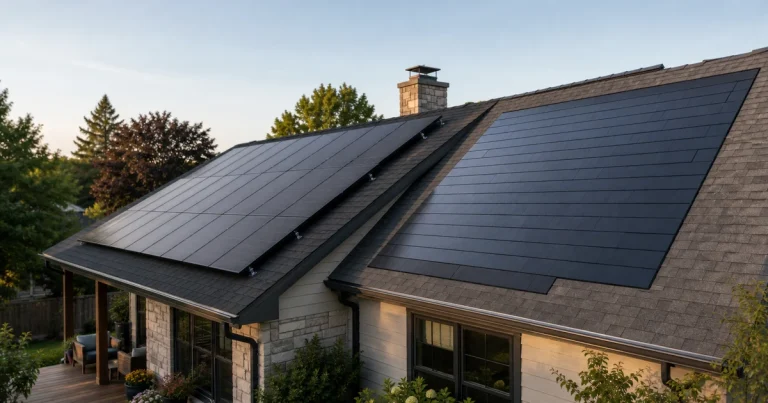
What Are Solar Panels? A Practical Guide for Buyers
What are solar panels? They are photovoltaic modules that make direct-current electricity, not complete home power systems by themselves. That difference matters when a buyer sees one solar quote promising low bills, another mentioning backup power, and neither clearly separating the panel from the equipment around it. A module rating describes only one part of the decision. The inverter, mounting, electrical equipment, local conditions, and approved design determine how that electricity can be used. Use this guide to identify what belongs in the quoted module and what still needs a project-specific answer.
Key Takeaways
- A PV cell is the semiconductor device; a module or panel protects and connects cells; an array is a group of modules.
- Solar panels make DC electricity from light. An inverter normally converts it into the AC used by most homes and grids.
- A panel is not a complete solar system and does not automatically provide battery backup during an outage.
- Rated watts are a controlled test reference, not an annual-energy or savings guarantee.
- Before approving a quote, compare the exact module, data sheet, system design, documents, and responsibility for the installation.
Global cumulative photovoltaic capacity exceeded 2,260 GW at the end of 2026. That scale makes solar familiar, but it does not make the terms on a quote interchangeable. A buyer who can separate the cell, module, array, inverter, and full system is better able to spot what a proposal does and does not include.
Table of Contents
- What is a solar panel?
- How does a solar panel make usable electricity?
- Is a solar panel the same as a complete solar system?
- What changes a solar panel’s real-world output?
- What should a buyer check before comparing solar quotes?
- Frequently Asked Questions
- What are solar panels made of?
- What is the difference between a solar cell, module, panel, and array?
- Do solar panels need direct sunlight?
- Do solar panels work at night?
- Are solar panels the same as solar-thermal panels?
- What does a solar inverter do?
- How many solar panels power a house?
- Do solar panels work during a power outage?
- How long do solar panels last?
- The decision after the definition
- Sources and references
What is a solar panel?
A solar panel is a weather-protected photovoltaic module made from electrically connected solar cells. The cells use semiconductor material to convert light into DC electricity. Because one PV cell generally produces only about 1 to 2 watts, manufacturers connect many cells into a module that can be handled, mounted, and used outdoors.
A typical module has cells, a protective front layer, encapsulating materials, a rear layer, a frame, and a junction box. The exact construction differs by product, so a buyer should read the data sheet for the quoted model instead of assuming every panel uses the same materials or component configuration.
A vocabulary check: A cell is the electricity-generating semiconductor device. A module or panel is a protected group of cells. An array is a connected group of modules. A PV system includes the array and the equipment needed to mount, convert, protect, and use its electricity.
For the fields that identify one exact product, read the solar panel specifications that distinguish one module from another.
How does a solar panel make usable electricity?
A solar panel makes DC electricity when its cells absorb light and collect the resulting movement of electrons. Conductive metal contacts take that current from the cell. The panel’s output then travels through the approved electrical equipment to an inverter, which converts DC into the alternating-current electricity used by most appliances and the grid.
The practical sequence is simple:
- Light reaches the photovoltaic cells.
- The semiconductor material transfers that energy to electrons.
- Metal contacts collect the movement as DC electricity.
- Electrical equipment carries the DC output to an inverter.
- The inverter provides AC electricity for the connected system.
The important distinction is that sunlight does not become a wall-outlet supply in one step. The module performs the light-to-DC conversion. The inverter and system design perform the DC-to-AC handoff. The solar PV panel comparison guide explains the technology choices that come after this basic electricity path.
Is a solar panel the same as a complete solar system?
No. A solar panel is the generation component, while a complete PV system also needs the equipment that supports and uses its output. The equipment list varies by project, but the distinction prevents a module quote from being mistaken for a finished, outage-capable installation.
| Component | Main job | Buyer question |
|---|---|---|
| PV module | Makes DC electricity from light | Which exact model and data-sheet revision are quoted? |
| Mounting | Holds modules in the designed position | Is the roof or ground structure within the approved scope? |
| Inverter | Converts DC to AC | Is it compatible with the selected modules and project design? |
| Wiring and protection | Carries and protects electricity | Who is responsible for the approved electrical scope? |
| Monitoring | Shows system operating information | What data and service access will the owner receive? |
| Battery, if specified | Stores electricity for later use | Does the design include the required backup equipment and operating mode? |
A battery stores electricity that has already been generated. It does not generate solar power, and a grid-connected system does not automatically serve home loads during an outage. The solar inverter, isolation equipment, battery configuration, and approved design determine that behavior. Use the photovoltaic versus solar panels terminology guide if a quote mixes electricity-generating PV equipment with solar-thermal equipment that captures heat instead.
What changes a solar panel’s real-world output?
Rated module power is a controlled comparison value, not a forecast of annual energy or savings. Real output changes with the light reaching the array, shade, temperature, orientation, soiling, electrical equipment, and the site’s final design. A qualified production model should state its weather data and assumptions before a buyer uses it to compare proposals.
Panels can produce electricity in diffuse daylight, but their output is usually lower than in strong direct sun. They do not generate electricity from darkness at night. A battery or grid connection can supply electricity after sunset, but that does not mean the panel is producing at that time.
Temperature is another useful reminder that nameplate power is not an all-day promise. Solar cells generally work better at lower temperatures because higher temperatures reduce voltage more than they increase current. Technology details can matter as well, but a technology label should not replace the complete design review. Compare current monocrystalline solar panel specifications only after confirming the roof fit, electrical compatibility, and model documentation.
Buyer lens: Ask first whether the claim describes a module under test conditions, a modeled system at a named site, or a measured operating system. Those are different kinds of evidence and should not be treated as interchangeable.
What should a buyer check before comparing solar quotes?
Start by defining the job that solar equipment must do. A homeowner may be assessing daytime electricity offset, an outage-capable design, or a roof constraint. A procurement buyer may be defining a module specification, documentation package, delivery point, and acceptance plan. The useful comparison fields change with that decision.
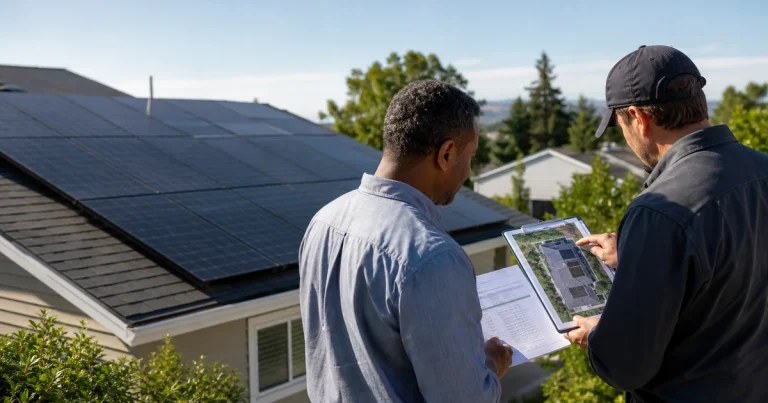
For a home proposal, ask for the annual-production assumptions, roof layout and shade assessment, inverter and electrical scope, interconnection path, warranty responsibility, and installer responsibility. Do not accept a universal panel count or savings figure as a substitute for those project details.
For a module purchase, ask for the exact model and revision, data sheet, dimensions, electrical fields, required documentation, quantity, delivery point, and acceptance process. The solar panel procurement guide provides the controlled requirement-sheet approach for that second task. If a project is deciding between supply routes, the manufacturer versus distributor comparison helps separate product selection from delivery and support responsibilities.
The next step should match the buyer. Homeowners should request a qualified site assessment. Installers, distributors, and project buyers should request a specification-matched module conversation only after their requirement sheet is defined.
Frequently Asked Questions
What are solar panels made of?
Solar panels are usually built around photovoltaic cells protected by layers such as front glass, encapsulant, a rear layer, a frame, and a junction box. Construction details vary by model. Check the quoted module’s current data sheet and technical documentation when a material, connector, or construction detail affects the project.
What is the difference between a solar cell, module, panel, and array?
A cell is the semiconductor device that converts light into electricity. A module or panel is a protected group of connected cells. An array is a group of modules connected for a larger system. The terms help a buyer identify whether a claim applies to one cell, one module, or the whole installation.
Do solar panels need direct sunlight?
Solar panels can generate electricity from diffuse daylight, but output usually falls when less usable light reaches the cells. Shade, dirt, orientation, temperature, and other site conditions also affect output. Use a location-specific production model rather than assuming the rated wattage will apply through every weather condition.
Do solar panels work at night?
Solar panels do not generate electricity from darkness because PV cells need light to produce current. A battery can supply stored electricity, and the grid can supply electricity, but neither means the panel itself is generating after sunset.
Are solar panels the same as solar-thermal panels?
No. Photovoltaic panels make electricity, while solar-thermal collectors capture heat for applications such as water heating. Both use sunlight, but they serve different loads and require different equipment. Define the required output before comparing a PV proposal with a thermal proposal.
What does a solar inverter do?
A solar inverter converts the DC electricity generated by PV modules into AC electricity used by most homes and the grid. It may also provide system monitoring and manage the system’s interaction with battery equipment, depending on the design. Inverter selection is a compatibility decision, not an afterthought to panel selection.
How many solar panels power a house?
There is no universal panel count for a house. The answer depends on annual electricity use, local solar resource, roof geometry, shade, module rating, electrical design, utility rules, and the homeowner’s goal. Ask for a site-specific model with stated assumptions instead of a rule-of-thumb count.
Do solar panels work during a power outage?
Many grid-connected systems do not serve home loads during an outage unless they include properly designed backup capability. The inverter, isolation equipment, battery configuration, and approved system design control that behavior. Confirm it with the qualified installer or designer for the specific proposal.
How long do solar panels last?
Solar-panel service life depends on the exact module, its operating environment, installation conditions, maintenance history, and warranty terms. A general article cannot turn a warranty period into a project-specific service-life prediction. Review the model-specific warranty and ask how monitoring and a possible claim would be handled.
The decision after the definition
A solar panel is a PV module that converts light into DC electricity. That is the beginning of a purchase decision, not the end. The useful next question is whether the proposal identifies the exact module, the equipment that makes its power usable, and the people responsible for the site-specific design.
Homeowners should obtain a qualified site assessment before relying on production, savings, or backup claims. Procurement teams should control the module specification and documents before comparing price. These checks keep an attractive panel headline from standing in for the full system or supply commitment it does not describe.
Sources and references
- U.S. Department of Energy. Solar Photovoltaic Technology Basics. https://www.energy.gov/cmei/systems/solar-photovoltaic-technology-basics
- U.S. Department of Energy. Solar Photovoltaic Cell Basics. https://www.energy.gov/cmei/systems/solar-photovoltaic-cell-basics
- U.S. Department of Energy. Solar Photovoltaic System Design Basics. https://www.energy.gov/cmei/systems/solar-photovoltaic-system-design-basics
- U.S. Department of Energy. Solar Integration: Inverters and Grid Services Basics. https://www.energy.gov/cmei/systems/solar-integration-inverters-and-grid-services-basics
- U.S. Department of Energy. Solar Photovoltaic Performance and Efficiency Basics. https://www.energy.gov/cmei/systems/solar-photovoltaic-performance-and-efficiency-basics
- U.S. Energy Information Administration. Photovoltaics and electricity. https://www.eia.gov/energyexplained/solar/photovoltaics-and-electricity.php
- U.S. Department of Energy. How Does Solar Work? https://www.energy.gov/cmei/systems/how-does-solar-work
- IEA PVPS. Trends in PV Applications 2025. https://iea-pvps.org/trends_reports/trends-2025/