
LiFePO4 Battery Voltage Chart: 12V, 24V & 48V SoC and Charging Guide
A fully charged LiFePO4 battery can settle near 13.6 V for a 12V pack, 27.2 V for a 24V pack, or 54.4 V for a 48V-class 16-cell pack after charging stops. Those are resting reference values at room temperature. Your meter can read higher while a charger is active or lower while an inverter is drawing power.
Table of Contents
- 12V, 24V and 48V LiFePO4 State-of-Charge Chart
- How to Get a Useful Voltage Reading
- Why Voltage Is a Rough SoC Indicator
- 48V vs. 51.2V LiFePO4 Batteries
- Frequently Asked Questions
- Is 12.4 V fully charged for a 12V LiFePO4 battery?
- Does a 12V LiFePO4 battery need 14.6 V to charge fully?
- Why did my LiFePO4 battery voltage drop after charging?
- Can I set my 48V LiFePO4 charger to 58.4 V?
- What voltage is 50% charge on a LiFePO4 battery?
- Is 10.0 V the right inverter cutoff for a 12V LiFePO4 battery?
- Why did my LiFePO4 battery monitor suddenly jump to 100%?
- Do LiFePO4 batteries need a float voltage?
- Can I charge a LiFePO4 battery below freezing if the voltage looks normal?
- Which voltage chart should I use for two 12V LiFePO4 batteries?
12V, 24V and 48V LiFePO4 State-of-Charge Chart
Compare your reading with this LiFePO4 voltage chart after the battery has rested with no charging or load. State of charge (SoC) is the share of battery capacity remaining.
| Reference SoC | 12V class (4S, 12.8 V nominal) | 24V class (8S, 25.6 V nominal) | 48V class (16S, 51.2 V nominal) |
|---|---|---|---|
| 100% | 13.6 V | 27.2 V | 54.4 V |
| 90% | 13.3 V | 26.6 V | 53.3 V |
| 80% | 13.2 V | 26.5 V | 53.0 V |
| 60% | 13.1 V | 26.2 V | 52.5 V |
| 40% | 13.0 V | 26.0 V | 52.0 V |
| 20% | 12.9 V | 25.8 V | 51.5 V |
| 10% | 12.1 V | 24.2 V | 48.5 V |
The table uses selected points from Honray Energy’s single-cell reference at 25°C (77°F) after 30 minutes without charging or discharging. We multiplied the cell voltages by 4, 8 or 16 and rounded to the nearest 0.1 V. The 16S column is a calculated comparison, and individual packs can read differently. The last row is a low-charge reference. Set your inverter’s shutdown threshold using the battery and inverter manuals.
The letter S indicates the number of cell groups in series. Four 3.2 V nominal groups give a 12.8 V nominal pack. Eight give 25.6 V, and sixteen give 51.2 V. The nominal voltage identifies the pack’s voltage class and stays the same on the label as the battery charges and discharges.
How to Get a Useful Voltage Reading
- Pause charging and turn off loads using your system’s normal controls. Account for solar chargers, shore-power chargers and standby loads.
- Let the battery rest for the interval specified by its manufacturer.
- Check voltage at the designated battery test points or terminals if accessible and the manual permits it. If you use a display, check where it senses voltage and confirm battery current is near zero.
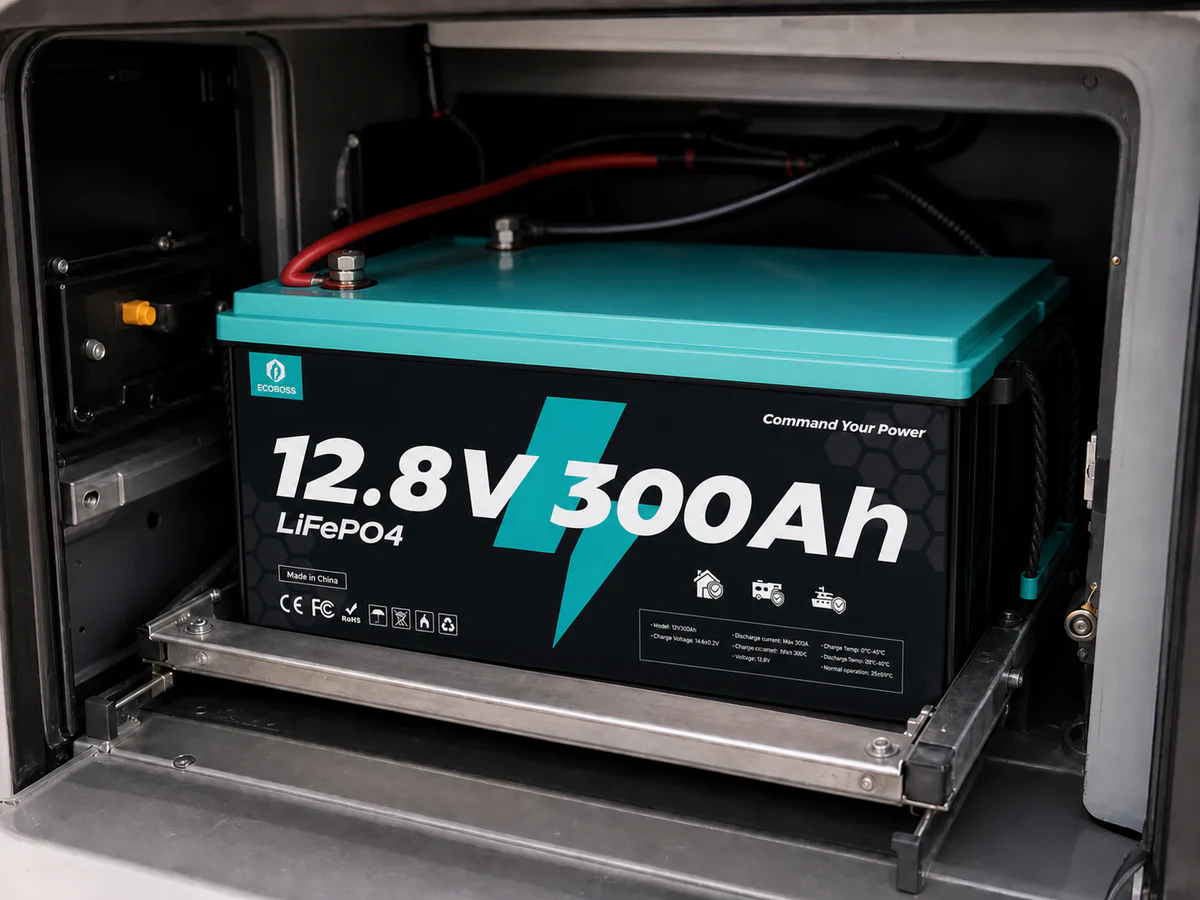
Suppose a 12V battery reads 12.4 V while an inverter powers a heavy load and returns to 13.1 V after the inverter shuts off and the battery rests. The first reading includes voltage sag. If the inverter reads appreciably lower than the battery terminals while delivering power, the cabling and connections can contribute additional voltage drop.
Why Voltage Is a Rough SoC Indicator
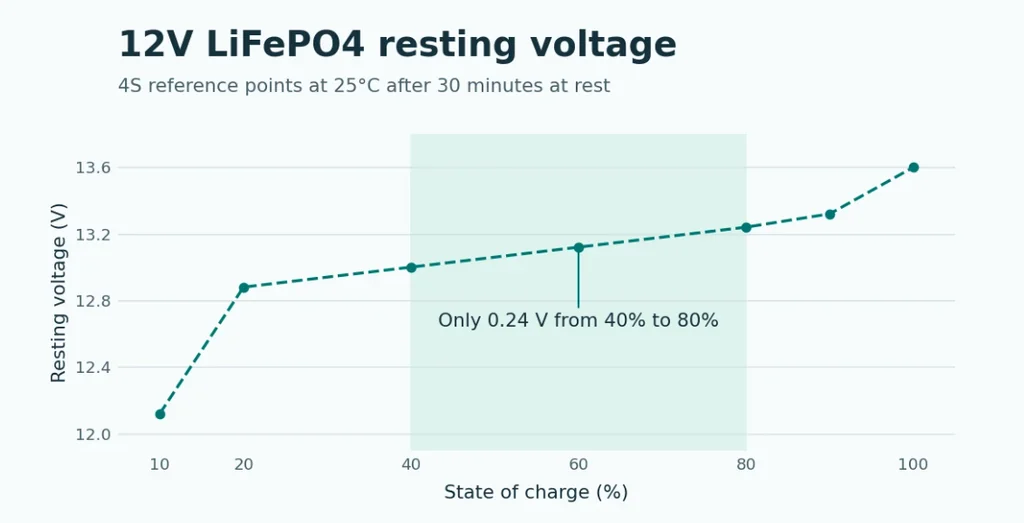
In the reference data, moving from 80% to 40% SoC changes a 12V pack’s estimated resting voltage by only 0.24 V before rounding. LiFePO4 has a broad, flat voltage plateau. At the same SoC, the voltage can also differ depending on whether the battery was recently charged or discharged. A reading near 13.2 V can therefore correspond to several charge levels.
For day-to-day monitoring, use a battery management system (BMS) that tracks current or a properly configured shunt monitor. A shunt estimates remaining charge by tracking amp-hours in and out. Configure it with the battery capacity and synchronize it using the manufacturer’s full-charge criteria. Its estimate can drift if part of the charge or load current bypasses the shunt.
48V vs. 51.2V LiFePO4 Batteries
Check the nominal voltage and series count before using a 48V LiFePO4 voltage chart. A 15S pack built from 3.2 V nominal cells comes to 48.0 V, while a 16S pack comes to 51.2 V. Both nominal voltages appear in residential storage products. Their charge limits differ, so check the battery and inverter compatibility documentation before selecting a profile. If your system supports closed-loop control, use the approved battery profile and communications setup so the battery can send its limits to the inverter.
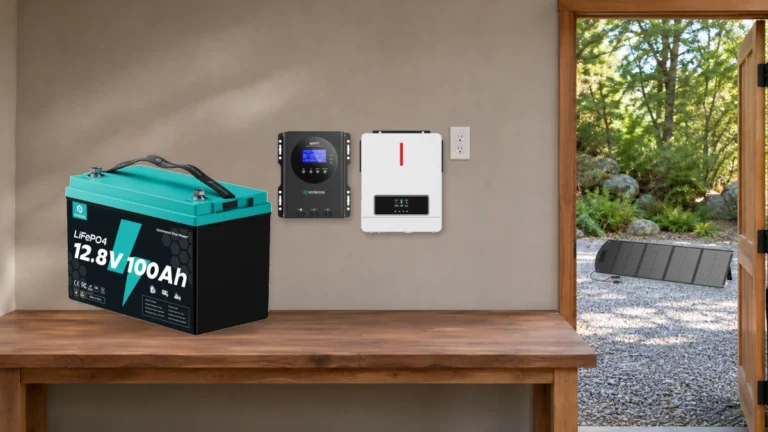
If you are comparing packs for an RV, boat or off-grid solar system, check the model’s nominal voltage and request its charging specifications before matching it with an inverter or controller.
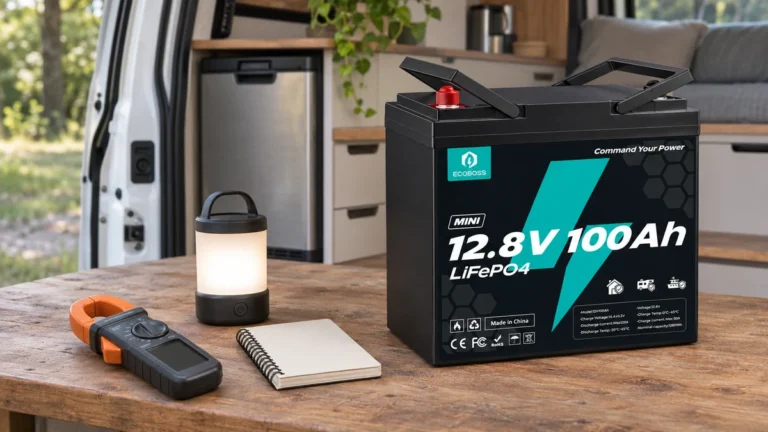
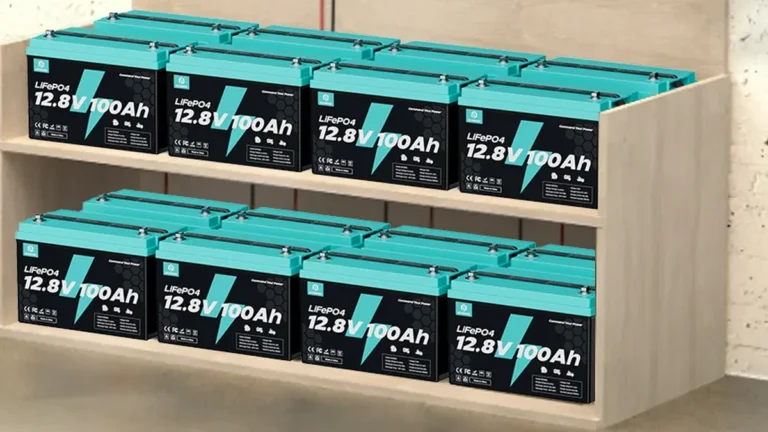
Before configuring charger or inverter voltage thresholds, verify your exact pack datasheet across Honray’s 12V (12.8V), 24V (25.6V), and 48V/51.2V LiFePO4 battery lines—including the EcoBoss 12V 100Ah ABS battery and EcoBoss 51.2V 100Ah Server Rack battery (up to 16P1S parallel).
Frequently Asked Questions
Is 12.4 V fully charged for a 12V LiFePO4 battery?
A resting reading of 12.4 V on a 4S LiFePO4 battery is below the usual full-charge resting reading. If you measured 12.4 V while equipment was running, pause the load and check again after the battery has rested. Use the battery’s own reference data or a synchronized monitor to estimate the remaining charge.
Does a 12V LiFePO4 battery need 14.6 V to charge fully?
Some 12.8 V LiFePO4 batteries use a lower absorption target. Follow your model’s complete charging profile, including how long to hold the absorption voltage.
Why did my LiFePO4 battery voltage drop after charging?
The voltage settles once the charger stops holding the pack at its charging target. If the reading continues to fall, check whether an inverter or other equipment is still drawing current.
Can I set my 48V LiFePO4 charger to 58.4 V?
Use 58.4 V only if the battery manufacturer specifies that setting for your pack. The number comes from multiplying 3.65 V by 16 series groups. A 48.0 V nominal 15S pack, or a 16S pack with a specified lower target, requires its own charge profile.
What voltage is 50% charge on a LiFePO4 battery?
In Honray Energy’s 25°C (77°F) reference after 30 minutes at rest, 50% SoC corresponds to about 13.0 V on a 12V (4S) pack and 26.1 V on a 24V (8S) pack. Scaling the same cell reference to a 51.2 V (16S) pack gives about 52.2 V. The voltage is nearly flat around the midpoint, so use your battery’s own chart or a calibrated monitor to estimate how much charge remains.
Is 10.0 V the right inverter cutoff for a 12V LiFePO4 battery?
Use the cutoff specified for your battery and inverter. The 10.0 V figure in some 12V LiFePO4 charts corresponds to 2.50 V per cell group in a 4S pack. A weak cell can trigger BMS protection while total pack voltage is still above that figure.
Why did my LiFePO4 battery monitor suddenly jump to 100%?
A LiFePO4 battery monitor can jump to 100% when it synchronizes at the end of a charge. If it jumps to 100% too early, check those settings against the battery and monitor manuals.
Do LiFePO4 batteries need a float voltage?
Float settings depend on the battery model. Follow the profile for your battery and keep float and absorption settings distinct.
Can I charge a LiFePO4 battery below freezing if the voltage looks normal?
Charge a LiFePO4 battery below freezing only if its manufacturer explicitly permits it under the stated conditions. Check the battery temperature and the charging limits in your model’s manual.
Which voltage chart should I use for two 12V LiFePO4 batteries?
Two matching 12.8 V LiFePO4 batteries in a manufacturer-approved parallel bank still use the 12V chart. In a manufacturer-approved series bank, they add up to 25.6 V nominal, so use the 24V chart when measuring across the whole bank. For a measurement across just one of those batteries, use the 12V chart.
OEM & ODM Customization
100% Dual EL Tested
Export to 50+ Countries
TÜV · UL · CE · UN38.3
Looking for wholesale pricing or custom OEM/ODM solutions?
Connect directly with our engineering team for a tailored quote within 24 hours.