
Solar Panels vs. Backup Generator: What Works in a Power Outage?
Solar panels with battery storage can keep essential circuits running during an outage. A fuel generator can also provide backup power when enough fuel is available. Your choice depends on what you need to run, how long the outage lasts, and your budget.
Solar battery backup needs an inverter that can handle your appliances and a battery with enough stored energy. A generator needs fuel and regular maintenance. Compare both options using the same appliances and outage duration.
Key Takeaways
- Most grid-tied solar arrays shut down during an outage. Ask whether the system can run independently of the utility and recharge the battery while the grid is down.
- Compare output in kilowatts (kW) to see what can run together. Compare energy in kilowatt-hours (kWh), or fuel at a known load, to see how long it can run.
- Price both systems for the same circuits. Show fuel, maintenance and expected component replacements separately from installation.
Table of Contents
- Solar battery backup vs. a generator at a glance
- What happens to rooftop solar when the grid goes down?
- How much power do your essential circuits need?
- A 24-hour and 72-hour outage with the same loads
- Compare installed cost and service life
- Solar panels, batteries and inverter
- Standby or portable fuel generator
- Choose for the outage you actually expect
- Frequently asked questions
- Do I need a generator if I already have solar panels?
- What is a portable solar generator?
- How much does it cost to run a standby generator for 24 hours?
- Can a generator recharge a home battery during an outage?
- Can solar panels power a house during an outage without a battery?
- How long will a 10 kWh home battery last in an outage?
- Can a solar battery backup run central air conditioning?
- Will my home battery be fully charged when the grid goes down?
- Can a portable generator power hardwired circuits in my house?
- Should I choose natural gas or propane for a standby generator?
Solar battery backup vs. a generator at a glance
A home battery draws on stored electricity and can recharge from solar if the equipment supports it during an outage. A standby generator makes electricity while its engine is running. A portable fuel generator is another option for individual plug-in loads or a professionally installed transfer setup.
| What to compare | Rooftop solar with battery backup | Fuel generator |
|---|---|---|
| Circuits it can run | Circuits served by the backup equipment, within the inverter’s output and surge limits | Plug-in loads or circuits served by transfer equipment, within the generator’s output and surge limits |
| First minutes of an outage | A configured home system can switch automatically. Ask how long the transfer takes. | An installed standby unit can start and transfer automatically. Many portable units need someone on site. |
| Runtime | Available battery energy at the start, plus solar energy the system can actually use during the outage | Fuel supply, consumption at the actual load and the manufacturer’s operating and service limits |
| Noise and siting | No combustion exhaust at the home during operation. Equipment may have fans and installation clearances. | Engine noise and exhaust. Fuel type and outdoor siting affect installation. |
| Ongoing checks | Capacity retention, backup reserve, controls and inverter support | Fuel readiness, engine maintenance and transfer operation |
What happens to rooftop solar when the grid goes down?
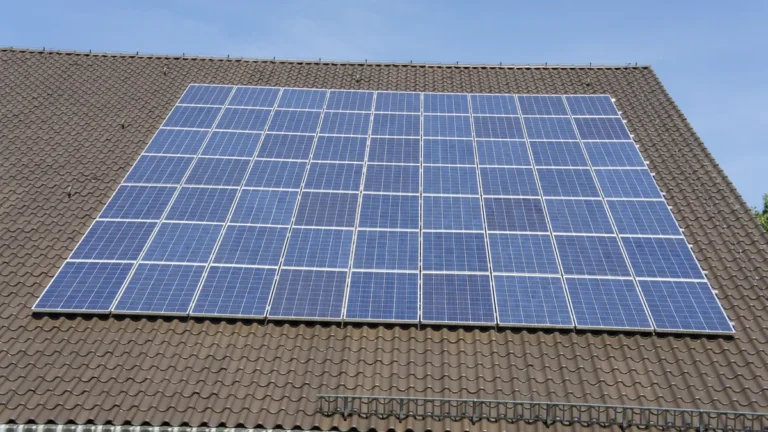
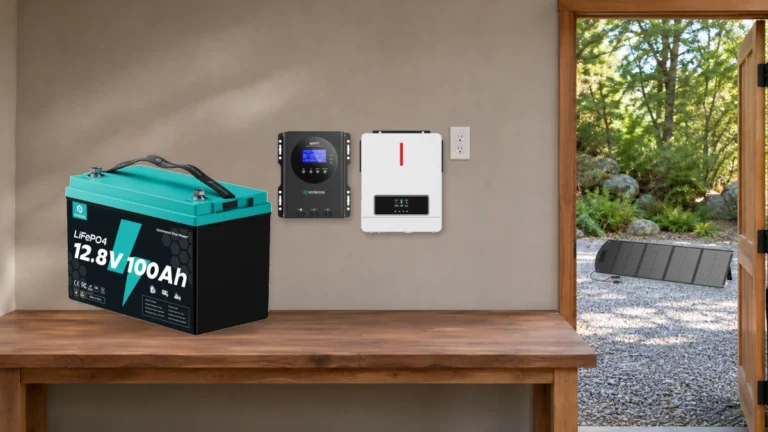
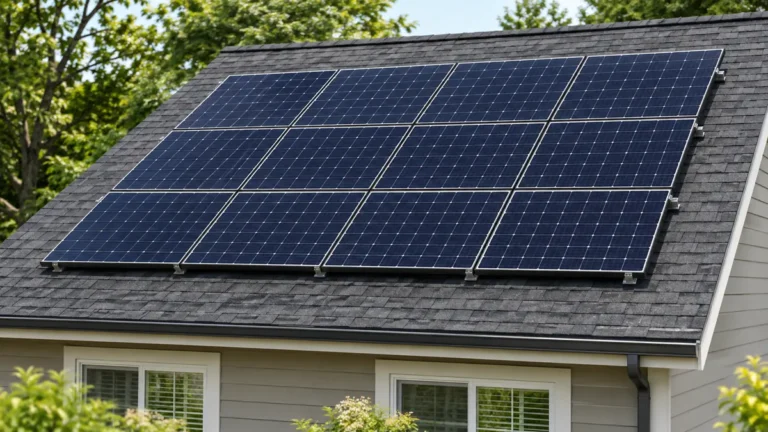
Most ordinary grid-tied solar systems shut down when the utility supply fails, even in full sun. To keep selected home circuits energized, a backup-capable system separates those circuits from the utility and supplies them locally. A properly configured inverter and battery can power the circuits after dark and let compatible solar panels recharge the battery when sunlight returns.
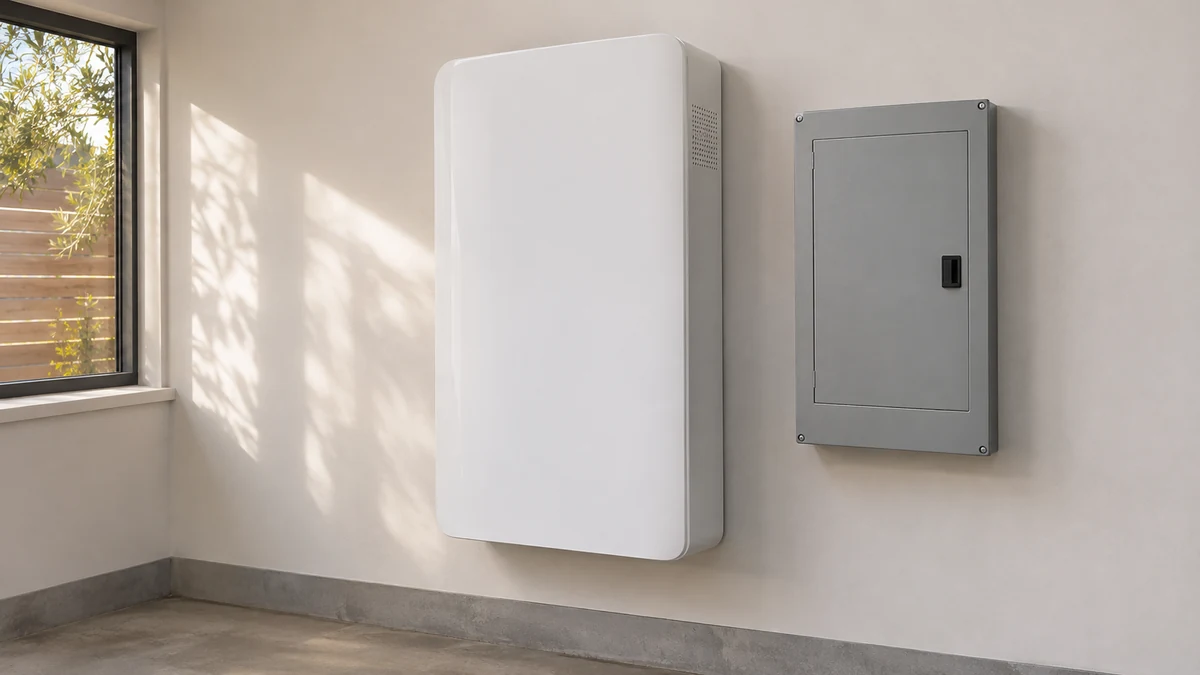
Illustrative installation. The installer can identify which circuits the backup equipment serves and confirm whether solar charging continues during a grid outage.
If you already have rooftop solar, give the installer the inverter model before requesting a quote. Ask whether you can keep it, which equipment isolates the supported circuits, and whether solar can restart the battery system after a low-charge shutdown. For a new installation, Honray’s home solar system overview shows the equipment categories to discuss with an installer.
How much power do your essential circuits need?
Write down which appliances must keep running, then check their simultaneous running power, startup demand and daily energy use. A refrigerator compressor draws power in cycles. A plug-in meter can measure its daily kWh, while the appliance documentation or an installer can help confirm startup demand. For a hardwired pump or air conditioner, also check voltage and whether it will start while other loads are running.
A 24-hour and 72-hour outage with the same loads
This example uses assumed loads and duty cycles for a household backing up a refrigerator, freezer, networking equipment, a few lights and small devices. Use your own measurements. Electric heating, air conditioning and well pumps can change the result substantially.
| Load | Assumed use | Energy per day |
|---|---|---|
| Refrigerator and freezer | 100 W combined average across cycling | 2.40 kWh |
| Modem and router | 20 W for 24 hours | 0.48 kWh |
| LED lighting | 40 W for 6 hours | 0.24 kWh |
| Laptop and phones | 80 W for 6 hours | 0.48 kWh |
| Other selected loads | 200 W for 6 hours | 1.20 kWh |
| Total | 200 W average over 24 hours | 4.80 kWh |
Over 24 hours, these circuits use 4.8 kWh. Over 72 hours, they use 14.4 kWh. If the battery can deliver 8 kWh of AC energy to the loads at the start of the outage, the simple battery-only estimate is 40 hours at 200 W average. That assumes 8 kWh is already net of conversion losses, system consumption and any inaccessible reserve. The inverter still needs to support simultaneous loads and motor starts.
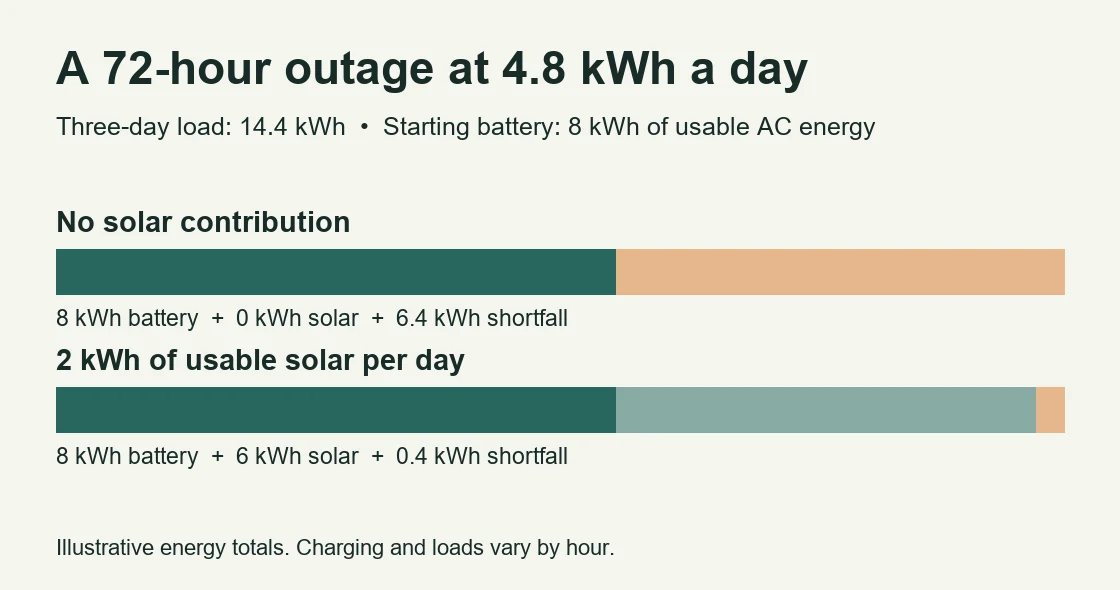
This is a three-day energy budget. A battery can run out before the next sunny period, even if a daily or multi-day total looks sufficient.
With 2 kWh of usable solar energy per day, the same home has 14 kWh available across three days, leaving a minimum shortfall of 0.4 kWh under the stated assumptions. With zero solar, the shortfall grows to 6.4 kWh. In a Berkeley Lab simulation of three-day outages with heating and cooling included, solar-plus-storage systems with 10 kWh of storage served 86% of critical load on average. Systems with 30 kWh served 96%. Those figures are modeled averages across U.S. counties and months.
For a generator quote, give the installer the same appliance list and load schedule. Request the fuel use at loads close to your expected draw, including what the generator burns if it stays on for small overnight loads. Then ask how many hours the usable fuel supply covers and what the manufacturer requires for extended operation.
Compare installed cost and service life
Ask both installers to quote the same circuits and outage target. A portable generator’s shelf price leaves out any work needed to energize house circuits. A price for an entirely new rooftop solar system includes an installation a homeowner with compatible panels may already have. If a quote includes a new array, see the Honray guide to solar panel and installation costs for the line items to look for.
Solar panels, batteries and inverter
Ask for separate prices for the battery, inverter or retrofit work, backup switch or gateway, panel changes and any new solar modules. Check the battery warranty for years, retained capacity and limits on use. Also check the inverter and panel warranties separately. Ask how much usable energy the battery should deliver near the end of its warranty. Use that lower figure to check whether the quoted system will still cover your essential circuits.
Standby or portable fuel generator
For a standby system, ask about the equipment pad, fuel hookup or tank, transfer switch, electrical work and commissioning. Request the service schedule and the cost of items such as oil, filters and the starter battery. Ask which service items depend on calendar time and which depend on run hours. Estimate outage fuel costs using the model’s consumption data and your own fuel price.
Show any projected utility savings as a separate line item, using your tariff and expected operating mode. That lets you compare the cost of backing up the same circuits even when one quote also includes a system for everyday solar production.
Choose for the outage you actually expect
- An evening or overnight outage. Check whether a battery can cover the chosen circuits from its realistic starting charge through morning. Use the inverter’s surge specifications to verify that compressors and pumps can start.
- Several days with poor solar conditions. Ask for a low-sun estimate and compare it with the fuel available to a standby generator. If you use a portable generator, the CDC advises running it outdoors more than 20 feet from doors, windows and vents.
- Large loads or a mix of short and long outages. Ask for separate quotes for essential circuits and for the same circuits plus major loads. If you want a battery and generator together, ask the installer to confirm how the two hand off power and whether the specific equipment allows generator charging.
Before comparing prices, ask each installer to put the circuit list, continuous and startup power, transfer behavior and expected runtime in writing. Include the conditions behind the runtime, particularly battery charge at the start, daily solar contribution and usable fuel supply.
Frequently asked questions
Do I need a generator if I already have solar panels?
A generator can provide backup for an existing grid-tied solar home if the installed solar equipment shuts down during outages. You can also ask about retrofitting a backup-capable battery. Compare both options against the circuits you need and the longest outage you want to cover.
What is a portable solar generator?
A portable solar generator usually combines a rechargeable power station with compatible solar panels. Small models serve individual plug-in loads, and house-circuit backup requires equipment specifically designed for that use. Check the station’s AC output and solar input separately. Honray portable panel charging guide
How much does it cost to run a standby generator for 24 hours?
Multiply the model’s fuel use per hour at the expected load by operating hours and the local price per unit of fuel. Generac’s 10 kW Guardian example uses about 0.97 gallons of liquid propane per hour at half load. At that constant load, the arithmetic is about 23.3 gallons for 24 operating hours, before accounting for any stops and service requirements.
Can a generator recharge a home battery during an outage?
A generator can recharge a home battery in systems designed and configured for generator charging. Other configurations allow both sources at the home but keep their operation separate. Confirm generator charging and transfer behavior with the manufacturer and installer.
Can solar panels power a house during an outage without a battery?
Most standard grid-tied solar arrays shut down during an outage. Some systems can supply a designated circuit or outlet directly from solar with a backup-capable inverter and the required controls. This kind of backup needs sufficient sunlight and stops when solar output can no longer support the loads.
How long will a 10 kWh home battery last in an outage?
A home battery that can deliver 10 kWh of usable AC energy at the start of an outage can cover a 500 W average load for about 20 hours without recharging. Use the energy actually available to the backed-up circuits. The result will be shorter if the battery starts partly charged or if the loads use more energy than estimated.
Can a solar battery backup run central air conditioning?
A solar battery backup can run central air conditioning if the backup system serves the AC circuit and can supply the required voltage, startup surge and running power. Ask the installer to check the outdoor unit and indoor blower against the equipment ratings, with other backed-up loads running. Then estimate how many hours of cooling the battery can support.
Will my home battery be fully charged when the grid goes down?
A home battery’s charge at the start of an outage depends on its recent use, solar production and backup reserve settings. If the system uses stored energy for everyday loads, it may start an outage partly charged. Check how your system maintains its reserve and whether it can charge from the grid before a forecast outage.
Can a portable generator power hardwired circuits in my house?
A portable generator can supply selected hardwired circuits through a transfer setup installed by a qualified electrician. The transfer equipment keeps generator power separate from utility lines. Feeding power through a wall outlet can send electricity back onto utility lines and endanger workers.
Should I choose natural gas or propane for a standby generator?
Natural gas can run a compatible standby generator while utility gas remains available at the required pressure. Propane gives you a supply on your property, with runtime limited by the usable fuel in the tank and your ability to refill it. Compare the quoted generator’s output and fuel use on the fuel you plan to use.
OEM & ODM Customization
100% Dual EL Tested
Export to 50+ Countries
TÜV · UL · CE · UN38.3
Looking for wholesale pricing or custom OEM/ODM solutions?
Connect directly with our engineering team for a tailored quote within 24 hours.