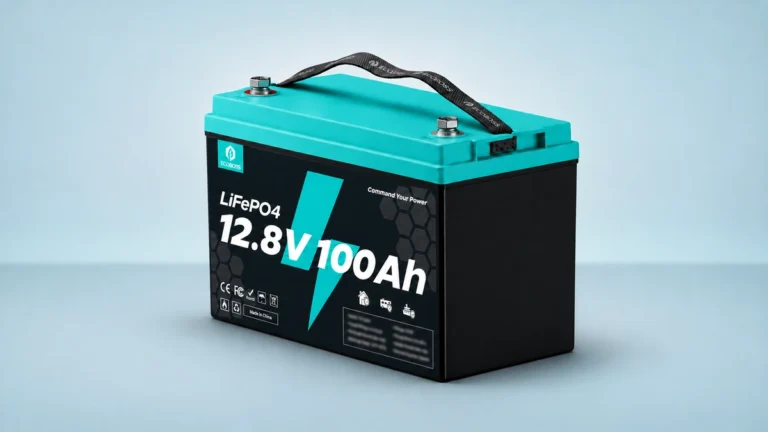

What Is a Solar Panel and How Does It Work?
A solar panel is a group of connected photovoltaic (PV) cells that turn sunlight into direct current (DC) electricity. When the cells absorb light, the light gives electrons in the cell material enough energy to move. An inverter converts the panel’s DC output to alternating current (AC) for household outlets. A compatible charge controller can use the DC output to charge a battery.
Key takeaways
- A solar cell converts light to electricity. A panel combines cells into one unit, and an array combines panels.
- PV cells produce DC electricity. An inverter supplies AC, and a battery stores energy for later use.
- The wattage on the label is a rating under test conditions. In use, panel output changes with light, shade, angle, and cell temperature.
Table of Contents
- What is a solar panel?
- How do solar panels work?
- Where does the solar electricity go?
- Rooftop solar for a home
- Off-grid and portable solar for a battery
- What changes a solar panel’s output?
- Frequently Asked Questions
- Do solar panels use heat or light to make electricity?
- How are solar panels made?
- What does a solar panel’s efficiency rating mean?
- Do solar panels work on cloudy days?
- Do solar panels work in winter or when covered in snow?
- Do solar panels produce electricity at night?
- Can solar panels work without an inverter?
- Do grid-connected solar panels need a battery?
- Can one solar panel power a whole house?
- What is the difference between solar cell efficiency and module efficiency?
What is a solar panel?
A solar panel, also called a PV module, contains electrically connected solar cells in a protective package. A cell is the part that generates electricity. A module groups cells into a unit with electrical leads. An array groups modules, and a solar power system includes the equipment that mounts the array and delivers its power.
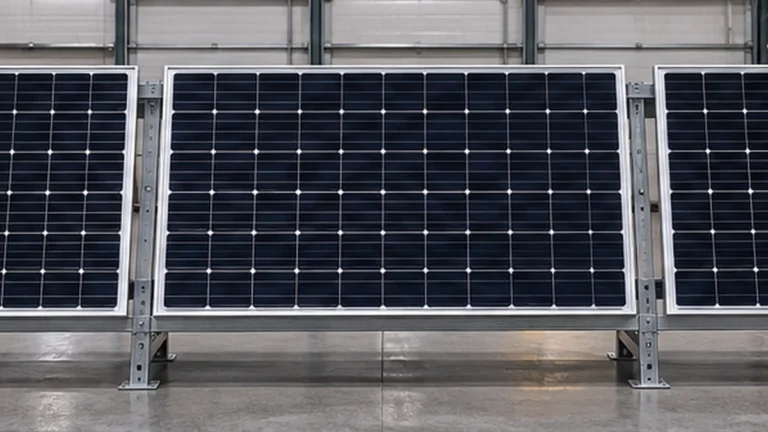
In a typical rigid crystalline silicon module, front glass lets light reach the cells. A clear material called an encapsulant seals and supports the cells, and a backsheet or second sheet of glass protects the rear. An aluminum frame often stiffens the assembly. A junction box connects the cell circuit to the module’s external leads.
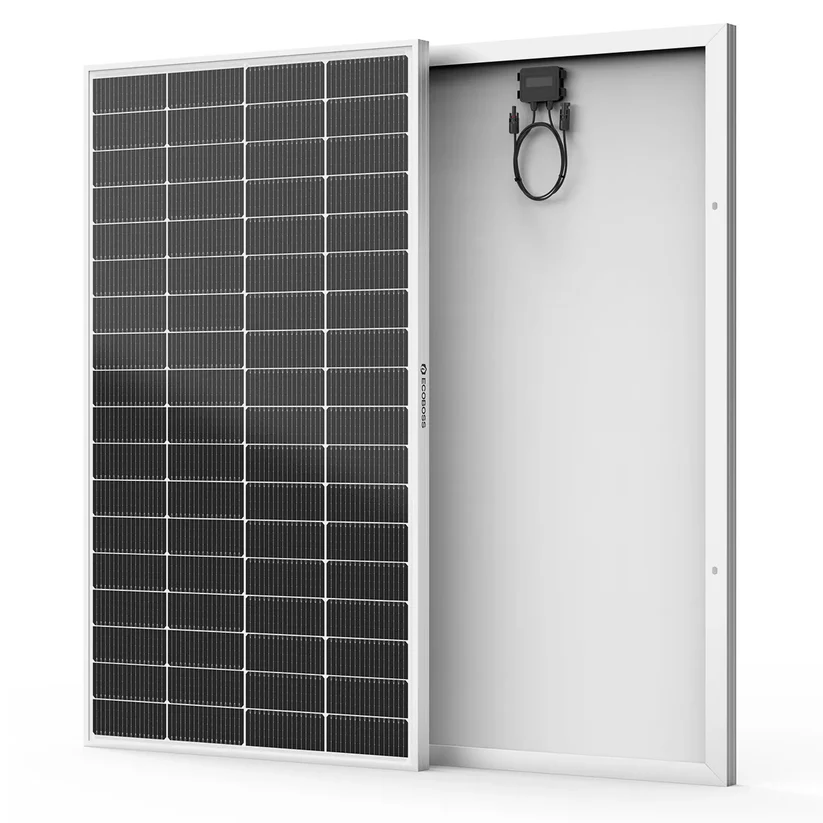
Monocrystalline cells use wafers cut from a single crystal of silicon. Polycrystalline cells use silicon with many crystal grains. Thin-film modules use a thin layer of light-absorbing material deposited on a surface such as glass. All three rely on photovoltaics.
How do solar panels work?
Solar panels generate DC electricity through the photovoltaic effect. Light transfers energy to electrons in the cells. The cells separate and collect the resulting charges so that current can flow through a connected circuit.
- The cell absorbs light. A solar cell contains a semiconductor, commonly silicon. When the semiconductor absorbs a photon with enough energy, an electron becomes free to move and leaves a space called a hole.
- An internal electric field separates the charges. The field directs the electron and the hole toward opposite sides of the cell, producing a voltage between its contacts.
- A connected circuit carries current. Metal contacts collect charge. When the panel connects to a load and the circuit is complete, current flows through the external circuit in one direction. That’s direct current.
Where does the solar electricity go?
Solar electricity goes from the panel to equipment that makes the DC output usable for the intended device or system. A home solar inverter converts it to AC. A battery charging circuit controls the voltage and current going into the battery. Some systems combine these functions in one unit.
Rooftop solar for a home
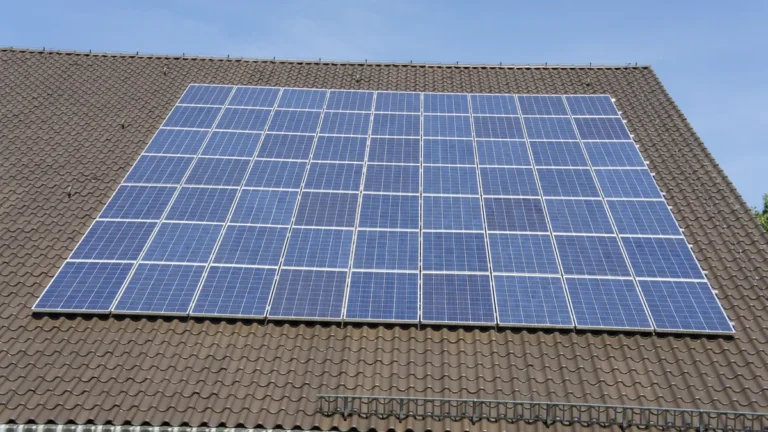
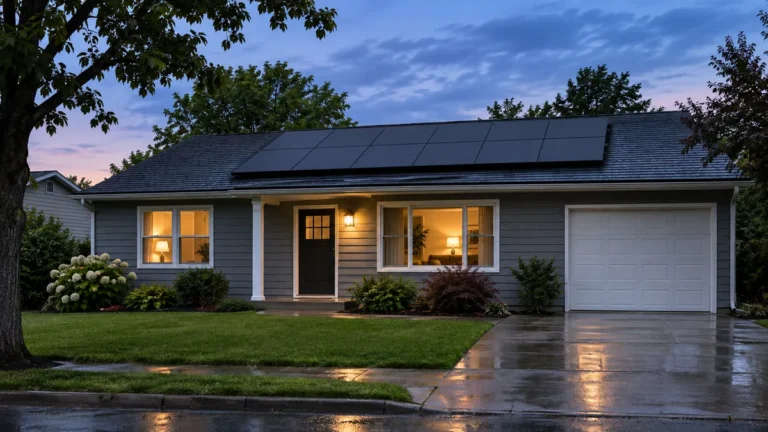
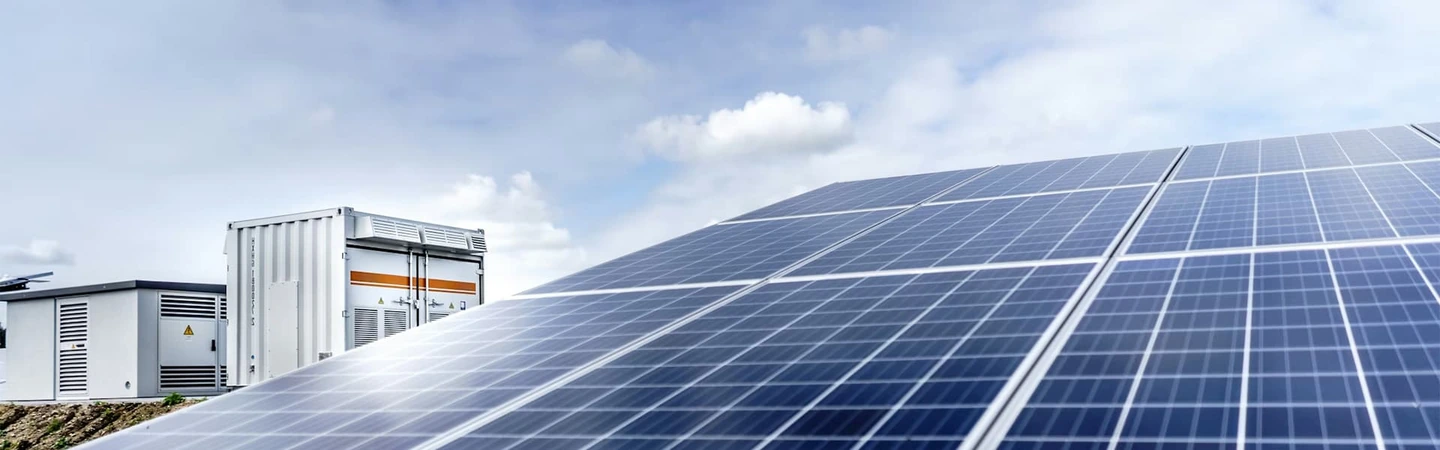
In a typical grid-connected home, the array supplies DC to a string inverter, or individual modules feed microinverters. The inverter’s AC output supplies the house. When the house needs more power than the array is providing, it can draw the shortfall from the grid. If the system is permitted and configured to export, surplus production can flow to the grid. A home battery can store energy for later use.
A typical grid-tied inverter shuts down during a utility outage to prevent energizing the grid. For backup, the system needs equipment that can safely isolate it from the grid and supply the designated loads. Many backup systems pair a compatible inverter with a battery so those loads can keep running when sunlight drops.
Off-grid and portable solar for a battery
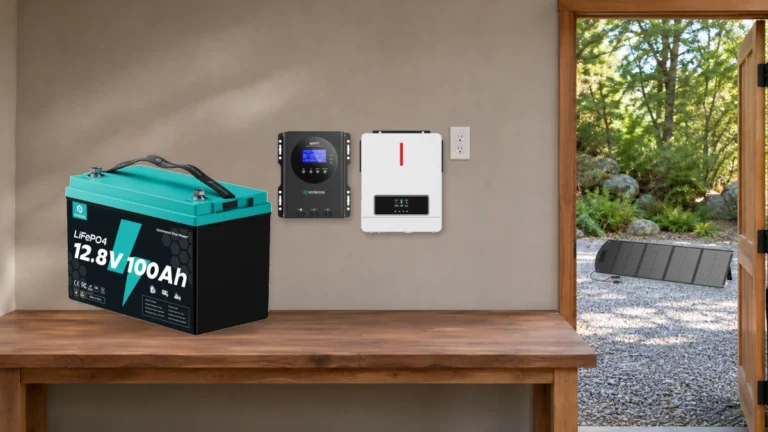
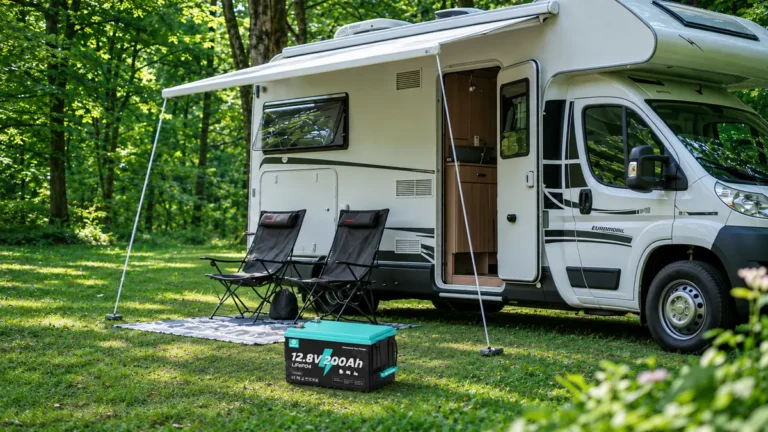
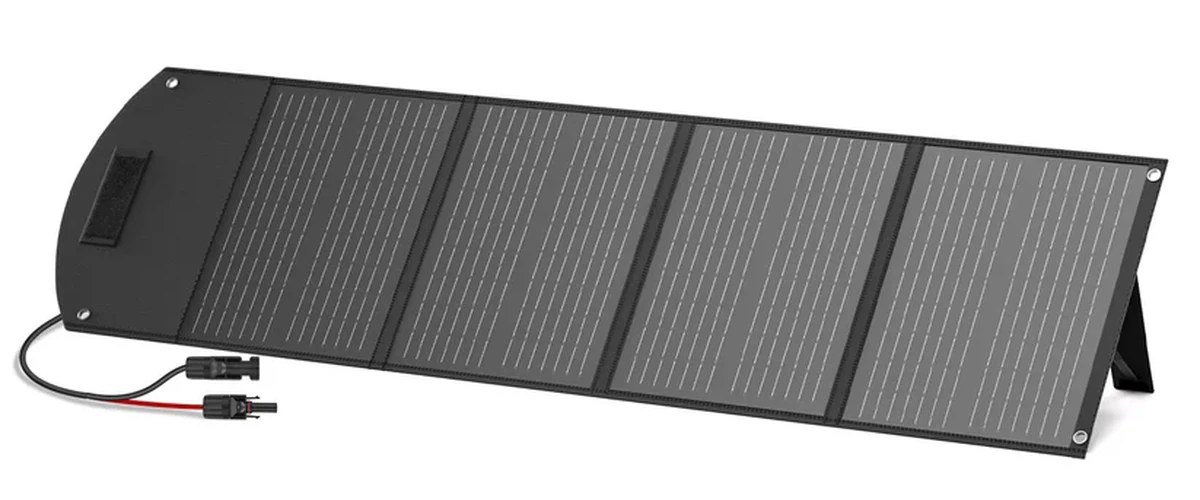
In a small off-grid setup, a solar charge controller regulates the panel’s output to charge a battery. A portable power station with a compatible solar input can combine the controller, battery, and output ports in one case. It needs an inverter when it supplies AC through an outlet. If you’re choosing a portable solar panel, check the panel’s connectors and the power station’s solar input limits.
| What you want to do | Where the panel’s DC output goes |
|---|---|
| Run household AC appliances | To an inverter, then to the home’s AC circuits. |
| Charge a battery | To a compatible charge controller or a power station’s compatible PV input. |
| Send surplus electricity to the grid | To a grid-connected inverter, then through an export-enabled connection. |
What changes a solar panel’s output?
The power a solar panel produces changes with the light reaching the cells and the temperature of the cells. Roof direction and tilt change how much light strikes the module throughout the day. A tree that shades part of a module can reduce its output even when the rest is in full sun. Under the same light, a hotter crystalline silicon cell generally produces less power than a cooler one.
A panel rated at 400 W has a DC power rating measured under standard test conditions. Those conditions include 1,000 W/m² of irradiance, the amount of incoming light power per square meter, and a cell temperature of 25°C (77°F). Watts measure power at a given moment. Watt-hours (Wh) measure how much energy the panel produces over time.
For example, suppose that panel averages 300 W for one hour. It generates 300 Wh, or 0.30 kWh, at the panel before downstream losses. Daily energy depends on how power changes over the whole day.
Frequently Asked Questions
Do solar panels use heat or light to make electricity?
Photovoltaic solar panels use light to make electricity. This is why they can generate power on a cold, sunny day. A solar thermal collector uses the sun’s energy to heat water or another fluid.
How are solar panels made?
For a typical crystalline silicon panel, manufacturers make solar cells from silicon wafers and connect the cells into strings. They laminate the strings between glass, protective layers, and a backsheet or second sheet of glass. A frame and junction box are then added to a typical rigid module.
What does a solar panel’s efficiency rating mean?
A solar panel’s efficiency rating is the share of the light power falling on the module that it converts to electricity under specified test conditions. At the same light level and panel area, a higher-efficiency module produces more power. For two panels with the same wattage rating, higher module efficiency generally means a smaller panel.
Do solar panels work on cloudy days?
Yes. Photovoltaic panels can generate electricity from the diffuse daylight that reaches them through clouds. The output is usually lower than in clear conditions at the same time of day because less light reaches the cells.
Do solar panels work in winter or when covered in snow?
Solar panels can generate electricity in winter whenever enough light reaches the cells. Shorter days often reduce daily energy production. Snow can sharply reduce output while it covers the active surface, and production can recover once the snow clears.
Do solar panels produce electricity at night?
Solar panels provide no useful solar output at night. A grid-connected home can draw nighttime power from the utility. A system with a charged battery can also use the energy stored earlier in the day.
Can solar panels work without an inverter?
Yes. A solar panel can feed a DC-only system through suitable power electronics. For example, a charge controller can regulate the panel’s DC output to charge a compatible battery. An inverter is required when the system needs to supply AC, such as for standard household outlets.
Do grid-connected solar panels need a battery?
A grid-connected solar system can operate without a battery. The home can use solar electricity as it’s produced and draw from the grid when production falls short. A battery lets the system store energy for later use. Backup during an outage requires a configuration designed to operate safely apart from the grid.
Can one solar panel power a whole house?
One solar panel usually supplies only part of a home’s electricity demand. To size a home system, compare the home’s electricity use in kilowatt-hours with the estimated solar production at that location. A system that runs the home off-grid also needs enough power for appliances running at the same time and a way to supply electricity after dark.
What is the difference between solar cell efficiency and module efficiency?
Solar cell efficiency measures how effectively an individual silicon wafer converts sunlight under laboratory STC conditions (often 23%–26%), whereas module efficiency divides total panel output by the full outer frame area (typically 2–4 percentage points lower due to frame borders and cell spacing).
OEM & ODM Customization
100% Dual EL Tested
Export to 50+ Countries
TÜV · UL · CE · UN38.3
Looking for wholesale pricing or custom OEM/ODM solutions?
Connect directly with our engineering team for a tailored quote within 24 hours.