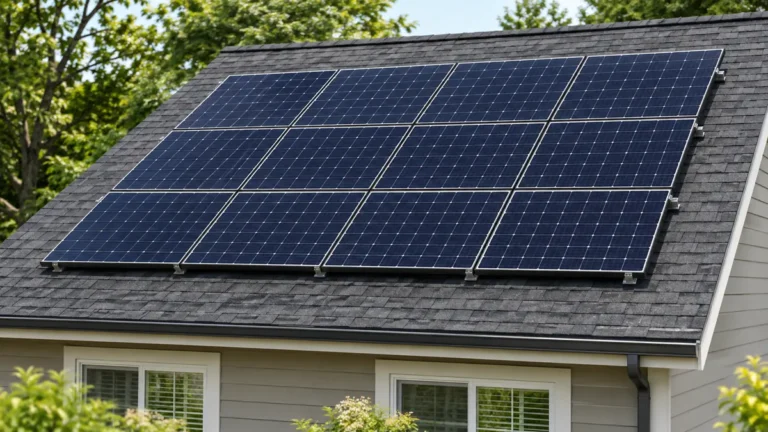

LiFePO₄ Batteries Compared With NMC and Lead-Acid
A LiFePO4 battery is a rechargeable lithium-ion battery that uses lithium iron phosphate in its positive electrode. Often called LFP, it is used in solar storage and RV house batteries, where the battery may charge and discharge every day. NMC lithium-ion cells generally store more energy per kilogram, while lead-acid can still make sense for an existing backup system that rarely discharges.
Key Takeaways
- LiFePO4 and NMC are both lithium-ion chemistries. Their positive electrode materials differ.
- LFP generally offers greater thermal stability and is well suited to frequent cycling. NMC generally offers higher energy density.
- When replacing a lead-acid battery, compare usable watt-hours and check the charger, load current and operating temperature limits.
Table of Contents
- What does LiFePO4 mean?
- LiFePO4 vs. NMC vs. lead-acid at a glance
- LiFePO4 vs. NMC: cycle life and thermal stability
- LiFePO4 vs. lead-acid: does 100 Ah mean the same runtime?
- What should you check before replacing lead-acid with LiFePO4?
- When does LiFePO4 make sense for solar or an RV?
- Frequently Asked Questions
- Is an AGM battery the same as a LiFePO4 battery?
- How long does a LiFePO4 battery last?
- Can you charge a LiFePO4 battery in freezing weather?
- Can you mix LiFePO4 and lead-acid batteries in the same bank?
- Can you tell how full a LiFePO4 battery is from its voltage?
- Can a 100 Ah LiFePO4 battery run a 1,000 W inverter?
- Is LiFePO4 safer than NMC lithium-ion for indoor home solar storage?
- How much usable capacity does a 100Ah LiFePO4 battery deliver compared with a 100Ah AGM battery?
- How fast can you charge a standard Honray LiFePO4 battery vs. an NMC battery?
- What warranty applies when upgrading from lead-acid to Honray LiFePO4 batteries?
What does LiFePO4 mean?
LiFePO4 is the chemical formula for lithium iron phosphate, the material used in the battery’s positive electrode. NMC uses a lithium nickel manganese cobalt oxide positive electrode. In both, lithium ions move between the electrodes as the cell charges and discharges. Honray’s guide explains how lithium-ion batteries work.
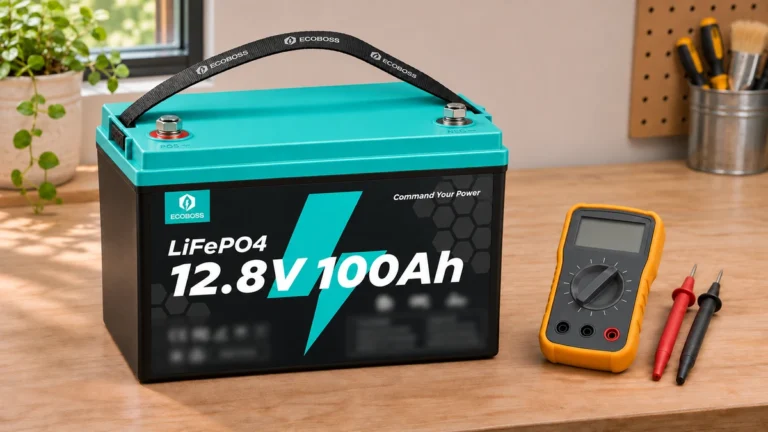
A common nominal voltage for an LFP cell is 3.2 V. Four of those cells in series give a nominal pack voltage of 12.8 V, which is why you may see a 12.8 V pack sold in the 12 V class. The nominal voltage helps identify the battery and estimate its rated energy. Set charging voltage according to the pack manufacturer’s instructions.
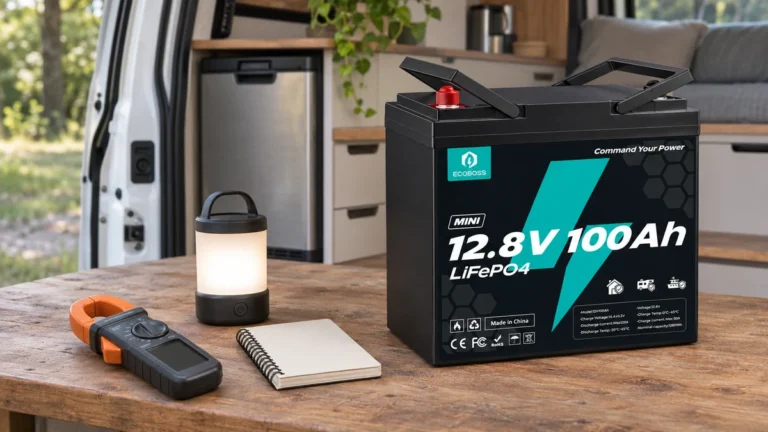
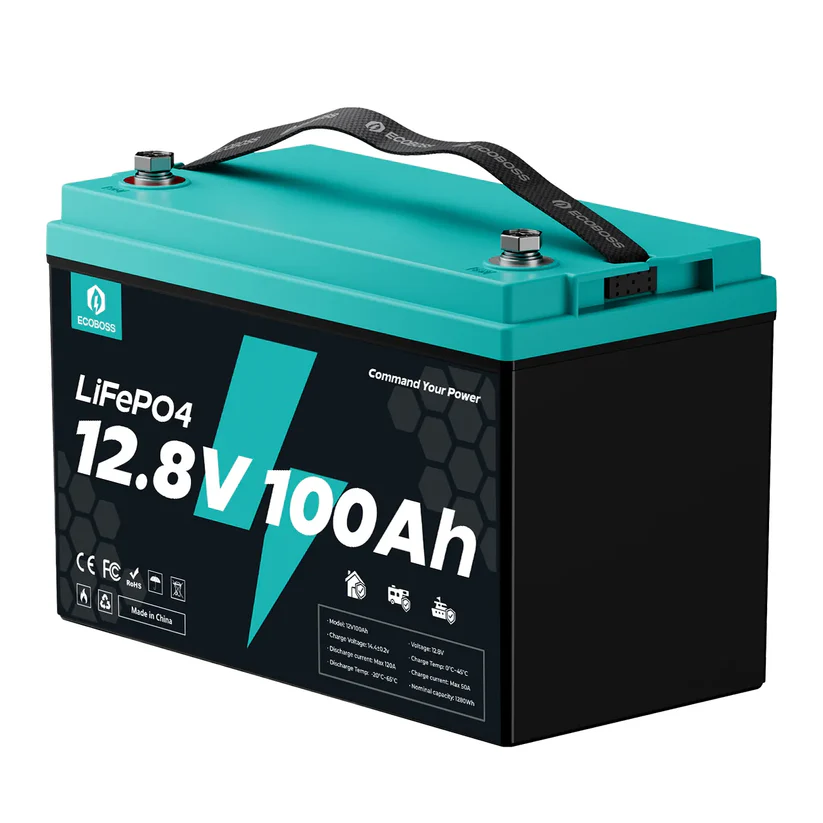
The EcoBoss 12.8V 100Ah LiFePO4 battery shows how to read those numbers. Multiply 12.8 V by 100 Ah to get 1,280 Wh (1.28 kWh) of nominal energy. Actual energy delivered to an appliance depends on how much of that capacity the system uses and any losses along the way.
LiFePO4 vs. NMC vs. lead-acid at a glance
| What to compare | LiFePO4 (LFP) | NMC lithium-ion | Lead-acid |
|---|---|---|---|
| Battery chemistry | Lithium iron phosphate positive electrode | Lithium nickel manganese cobalt oxide positive electrode | Lead-based plates and sulfuric acid electrolyte |
| Energy per kilogram | Generally between lead-acid and NMC | Generally highest of the three | Generally lowest of the three |
| Repeated cycling | Often selected for daily cycling | Cycle life depends on the cell and duty cycle | Cycle life is sensitive to depth of discharge |
| What to check | Pack charge limits, low-temperature charging and BMS current limits | Pack voltage, charge limits and thermal management | Charging profile, discharge rate and maintenance for the battery type |
| Where it fits | Frequently cycled solar storage and RV house banks | Weight-sensitive or space-constrained systems | Compatible standby systems and lower upfront cost applications |
These are general tendencies. For a purchase, compare complete packs under the same load and temperature assumptions. A cell’s energy density excludes the enclosure, electronics and other components that add weight and occupy space.
LiFePO4 vs. NMC: cycle life and thermal stability
LiFePO4 is a good candidate when a battery cycles frequently and the installation can accommodate the pack’s size and weight. NMC’s higher cell energy density can be valuable when equipment has to carry as much energy as possible within a strict weight or space limit.
In a multi-year Sandia study, the LFP cells tested lasted more equivalent full cycles than the NMC cells tested. The researchers varied temperature, discharge rate and depth of discharge, all of which can affect how quickly a cell loses capacity. When comparing two datasheets, look for a cycle rating tied to the same depth of discharge and remaining-capacity threshold. A cycle rating measured to 70% remaining capacity will count further into degradation than one measured to 80%.
LFP also generally offers better thermal stability than NMC. In one laboratory study, the tested LFP cells required more external heat to reach the study’s failure threshold than the tested NMC cells. At the pack level, safety also depends on cell quality, the battery management system (BMS), electrical protection and the installation.
LiFePO4 vs. lead-acid: does 100 Ah mean the same runtime?
Two batteries rated at 100 Ah can run the same appliance for different lengths of time. A 12 V, 100 Ah lead-acid battery has about 1,200 Wh of nominal energy. A 12.8 V, 100 Ah LiFePO4 battery has 1,280 Wh. To estimate how much energy you can actually draw, apply each manufacturer’s recommended discharge limit and check capacity at your expected load. Lead-acid capacity can fall as discharge current rises. An inverter also consumes some of the stored energy.
If the existing lead-acid bank meets the load and only runs during occasional outages, replacement cost may matter more than cycle life. For a bank that runs lights, refrigeration or other loads every night, compare the price of systems sized to deliver the same usable energy and check how the cycle ratings were measured.
What should you check before replacing lead-acid with LiFePO4?
- Charging sources. Check the solar controller, shore-power charger and alternator charging setup against the LFP pack manual. Use a supported charging profile and check whether the equipment applies lead-acid equalization or desulfation.
- Load and inverter. Check the operating voltage window and the pack’s continuous and surge current limits. A compressor or motor can briefly draw more current at startup than it does while running.
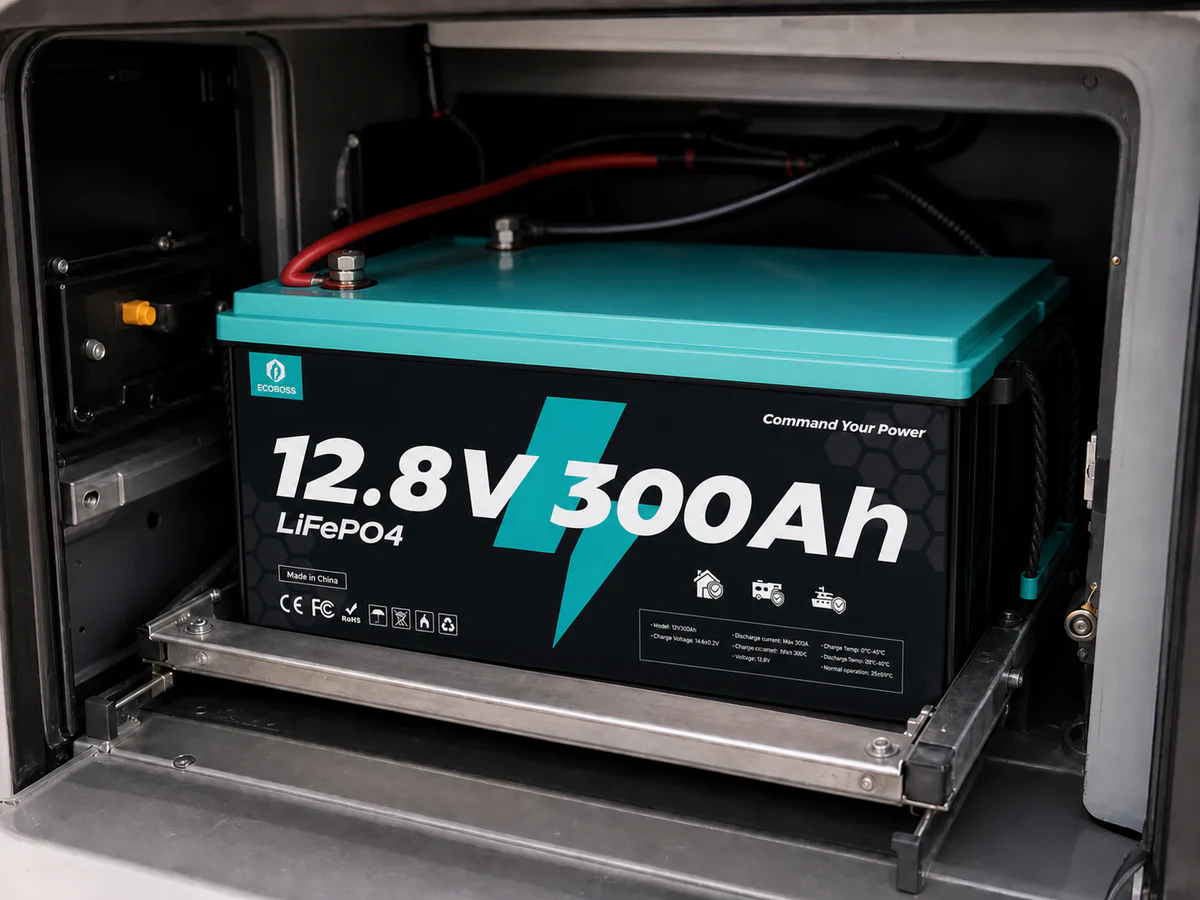
- Installation and temperature. Check compartment dimensions, mounting, terminal clearance and permitted charging temperatures. Confirm whether the pack is designed for house loads or explicitly rated for engine starting.
When does LiFePO4 make sense for solar or an RV?
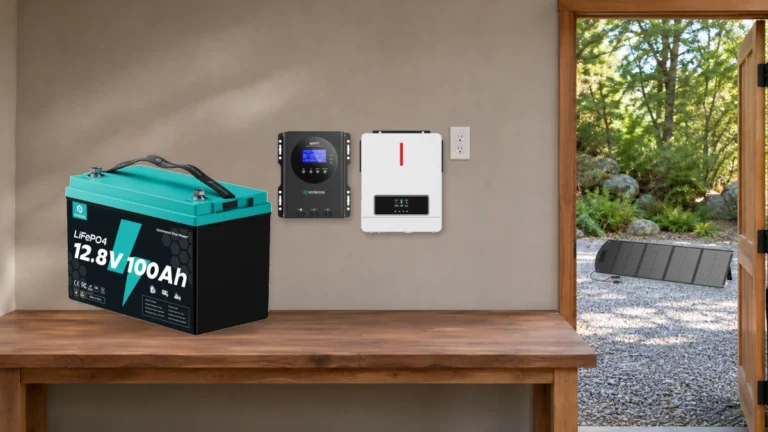
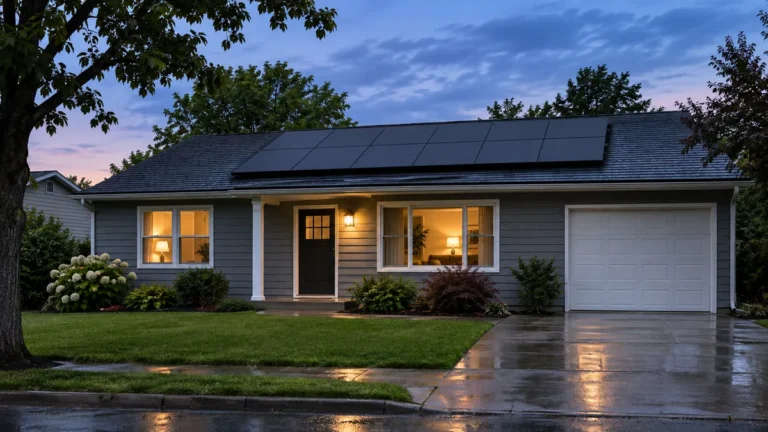
LiFePO4 is worth comparing when you expect frequent discharge and recharge. For a home or off-grid solar system, estimate how many watt-hours the loads use overnight or during an outage. Then check the inverter’s battery compatibility and how much energy the system can replenish before the next discharge. Honray’s LiFePO4 batteries for solar storage page covers home backup and off-grid configurations.
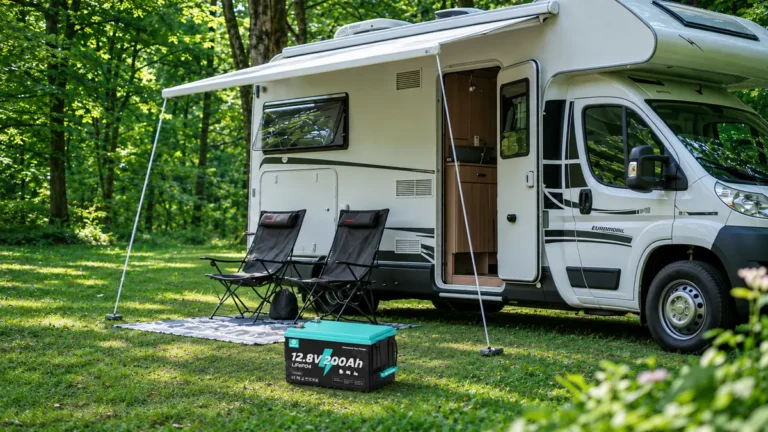
In an RV, start with the loads that run when the engine is off. Then measure the battery compartment and identify every charging source, including your alternator if it charges the house bank. Honray’s LiFePO4 RV house batteries page shows configurations for different space and voltage requirements.
Frequently Asked Questions
Is an AGM battery the same as a LiFePO4 battery?
They use different chemistries. AGM stands for absorbent glass mat, a type of lead-acid battery that holds its electrolyte in fiberglass mats. LiFePO4 is a lithium-ion chemistry with different charging requirements. Check both battery and charger documentation before changing types.
How long does a LiFePO4 battery last?
Service life depends on the pack, its age and how it is used. Check the rated cycles at a stated depth of discharge, temperature and remaining capacity. Then check the warranty separately. The same cycle rating can translate into different years of use in a daily-cycled solar bank and a seasonal RV.
Can you charge a LiFePO4 battery in freezing weather?
Charge a LiFePO4 battery only within its manufacturer’s specified temperature range. Many packs restrict charging near freezing, and the charge and discharge limits can differ. For winter use, check whether the exact pack blocks low-temperature charging or has a manufacturer-approved heating system.
Can you mix LiFePO4 and lead-acid batteries in the same bank?
Keep LiFePO4 and lead-acid batteries in separate banks. Their charging requirements and voltage behavior differ, so directly connecting them in series or parallel can lead to uneven charging. An RV can still have a lead-acid starter battery and a separate LiFePO4 house battery with a charging setup designed for both banks.
Can you tell how full a LiFePO4 battery is from its voltage?
Voltage alone gives only a rough estimate because LiFePO4 voltage changes relatively little through much of the discharge cycle. A compatible shunt-based battery monitor measures current flowing into and out of the battery to estimate state of charge. Configure it for your battery and follow the monitor’s instructions for synchronization.
Can a 100 Ah LiFePO4 battery run a 1,000 W inverter?
It depends on the battery’s discharge current rating and how much power the inverter actually supplies. For example, a 1,000 W AC load draws about 87 A at 12.8 V DC if the inverter is 90% efficient. The current rises as battery voltage falls, and some appliances draw extra current at startup. Compare the expected running and startup demand with the battery’s continuous and surge limits.
Is LiFePO4 safer than NMC lithium-ion for indoor home solar storage?
Yes, LiFePO4 (LFP) has a higher thermal runaway threshold and stronger phosphate-oxygen chemical bonds than NMC, making it the preferred chemistry for residential server-rack storage such as Honray’s EcoBoss 51.2V 100Ah Server Rack LiFePO4 battery.
How much usable capacity does a 100Ah LiFePO4 battery deliver compared with a 100Ah AGM battery?
A 12.8 V 100 Ah LiFePO4 battery routinely delivers 80%–100% of its 1,280 Wh rated capacity without accelerated wear, whereas a 12 V 100 Ah AGM lead-acid battery is typically limited to ~50% depth of discharge (~600 Wh usable) to preserve cycle life.
How fast can you charge a standard Honray LiFePO4 battery vs. an NMC battery?
Honray standard 12V–48V LiFePO4 packs support 0.25C to 0.5C continuous charging (for example, 50 A on a 100 Ah pack, or roughly 2 hours from empty at full 0.5C current), whereas 51.2V 100Ah Rack and 314Ah Wheeled units support up to 100 A and 157 A continuous charging respectively.
What warranty applies when upgrading from lead-acid to Honray LiFePO4 batteries?
Honray covers 12V–48V deep-cycle LiFePO4 packs with a 3–5 year warranty and 51.2V Server Rack and Wheeled ESS models with a 5–10 year warranty, governed by the formal SKU quotation and written warranty terms—compared with typical 1–3 year warranties on lead-acid AGM batteries.
OEM & ODM Customization
100% Dual EL Tested
Export to 50+ Countries
TÜV · UL · CE · UN38.3
Looking for wholesale pricing or custom OEM/ODM solutions?
Connect directly with our engineering team for a tailored quote within 24 hours.